
If you own a Hyundai or Kia from the 2010s with the 2.4-liter Theta II engine and you've started hearing a knock, you're not imagining things, and you're definitely not alone. The Theta II GDI is at the center of one of the biggest engine-failure stories of the last decade, complete with multiple recalls, extended warranties, and a class-action settlement. Here's the straight talk on what goes wrong, how to spot it, and what your options are.
Which cars have the Theta II 2.4L
The 2.4L Theta II (and the related 2.0T) showed up across a big chunk of the Hyundai and Kia lineup from roughly 2011 to 2019: Hyundai Sonata, Santa Fe and Tucson; Kia Optima, Sorento and Sportage, among others. It's a gasoline direct-injection four-cylinder that, on paper, should have been unremarkable.
What actually fails
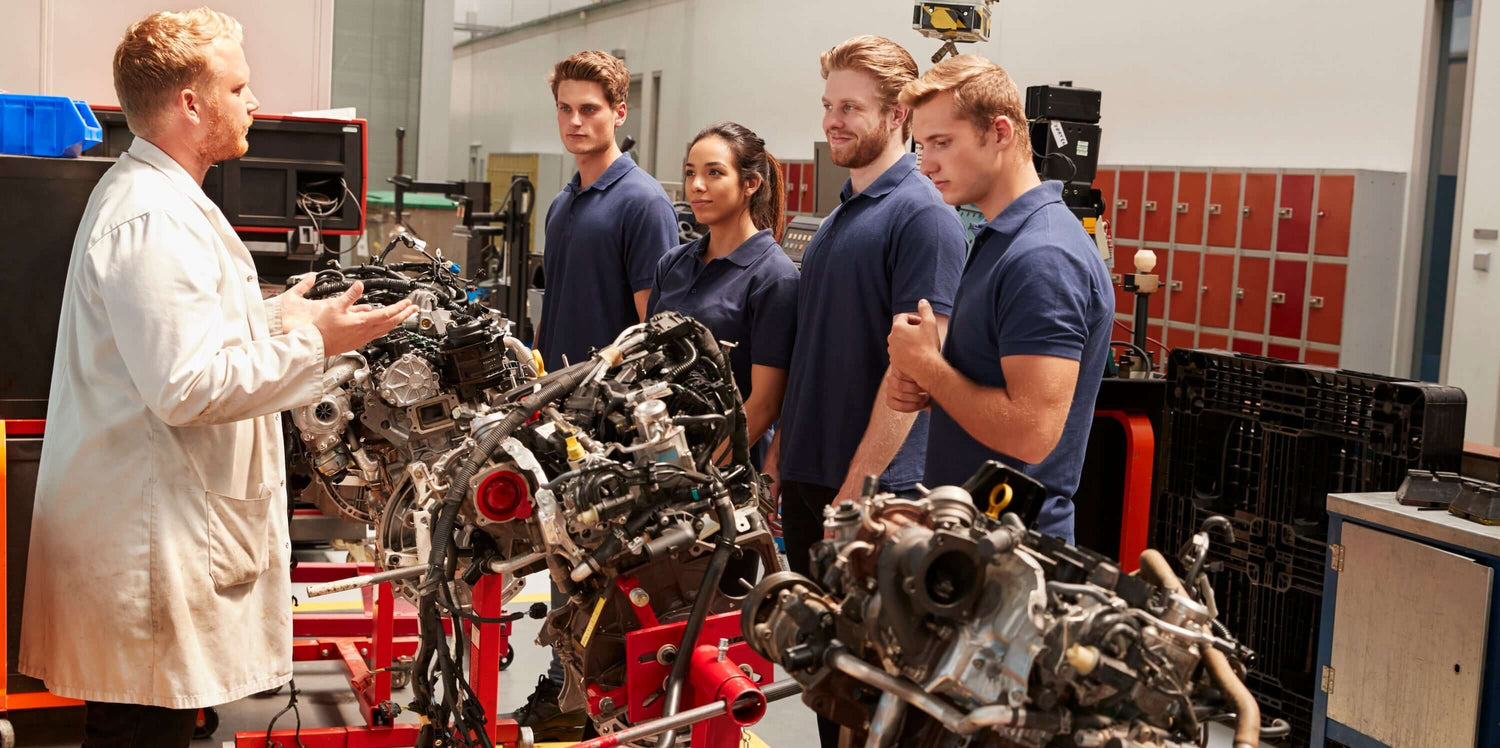
The core problem traces back to the engine's bottom end. On affected engines, metal debris left over from the manufacturing process and/or oil-flow issues led to the connecting-rod bearings wearing out prematurely. Once a rod bearing goes, you get the classic symptom: a knocking or ticking that gets louder with RPM. Left alone, it can progress to the engine seizing, stalling in traffic, or in the worst cases, an engine-bay fire.
Symptoms to watch for
- A metallic knock or rod knock that rises with engine speed, often worst at idle when warm or on startup.
- The oil light flickering or coming on, especially at idle.
- Unusual oil consumption between changes.
- Stalling or a sudden loss of power while driving.
- A ticking that appears and then the engine runs rough.
If you hear a deep, rhythmic knock, stop driving it. Continuing to run an engine with rod knock is how a repairable situation becomes a seized block.
Recalls, warranty extensions, and the settlement
Because the failures were so widespread, Hyundai and Kia issued recalls and rolled out a software update called the Knock Sensor Detection System (KSDS), designed to catch bearing wear early and put the car into a reduced-power mode before catastrophic failure. There were also warranty extensions on affected engines and a class-action settlement covering many owners.
Coverage depends on your exact VIN, model year, and history, so the smart first move is to check your VIN directly with Hyundai or Kia to see what recalls and warranty extensions apply to your specific car. Don't assume you're covered or not covered based on a forum post — verify it against your VIN.
When the engine is already gone
If your Theta II has already knocked itself out — seized, thrown a rod, or been condemned by a shop — you're past the repair stage. A spun rod bearing means the crankshaft and bearings are damaged, and patching one cylinder doesn't fix a bottom end that's coming apart. At that point the realistic options are a short block, a long block, or a complete replacement engine.
If your car isn't covered by warranty or the settlement, a replacement engine is usually the way to get a solid, well-kept Sonata, Santa Fe, Optima or Sorento back on the road for far less than a new car. We stock replacement options in our Theta II engines collection, plus broader Hyundai and Kia engines, all backed by a written warranty and shipped nationwide.
How to protect a healthy Theta II
- Change the oil on time, every time. These engines are unforgiving about oil neglect.
- Check the level between changes. Catching consumption early can save the engine.
- Make sure the KSDS software update has been applied (check your VIN).
- Take any new knock seriously and immediately.
FAQ
Is the Theta II knock always fatal?
A true rod knock means bearing damage that only gets worse. It won't fix itself, and driving on it risks a seizure. Get it diagnosed right away.
How do I know if my engine is covered?
Check your specific VIN with Hyundai or Kia for recalls and warranty extensions. Coverage varies by model year and history.
Can I just replace the bearings?
Sometimes a shop will try, but if the crank is scored or the block is damaged, a short block, long block, or complete replacement engine is the more reliable fix.
Where to buy a Theta II replacement
The 2.4L Theta II family (G4KC, G4KE, G4KJ) and the 2.0L turbo G4KH are all four-cylinders, so the full range and current pricing sit on our 4-cylinder engines for sale page, alongside the dedicated Theta II engine listings. Confirm your engine code and the engine digit in your VIN with us before ordering — a 2.4L Sonata can be a G4KC, a G4KE or a G4KJ depending on year, and those are not interchangeable.