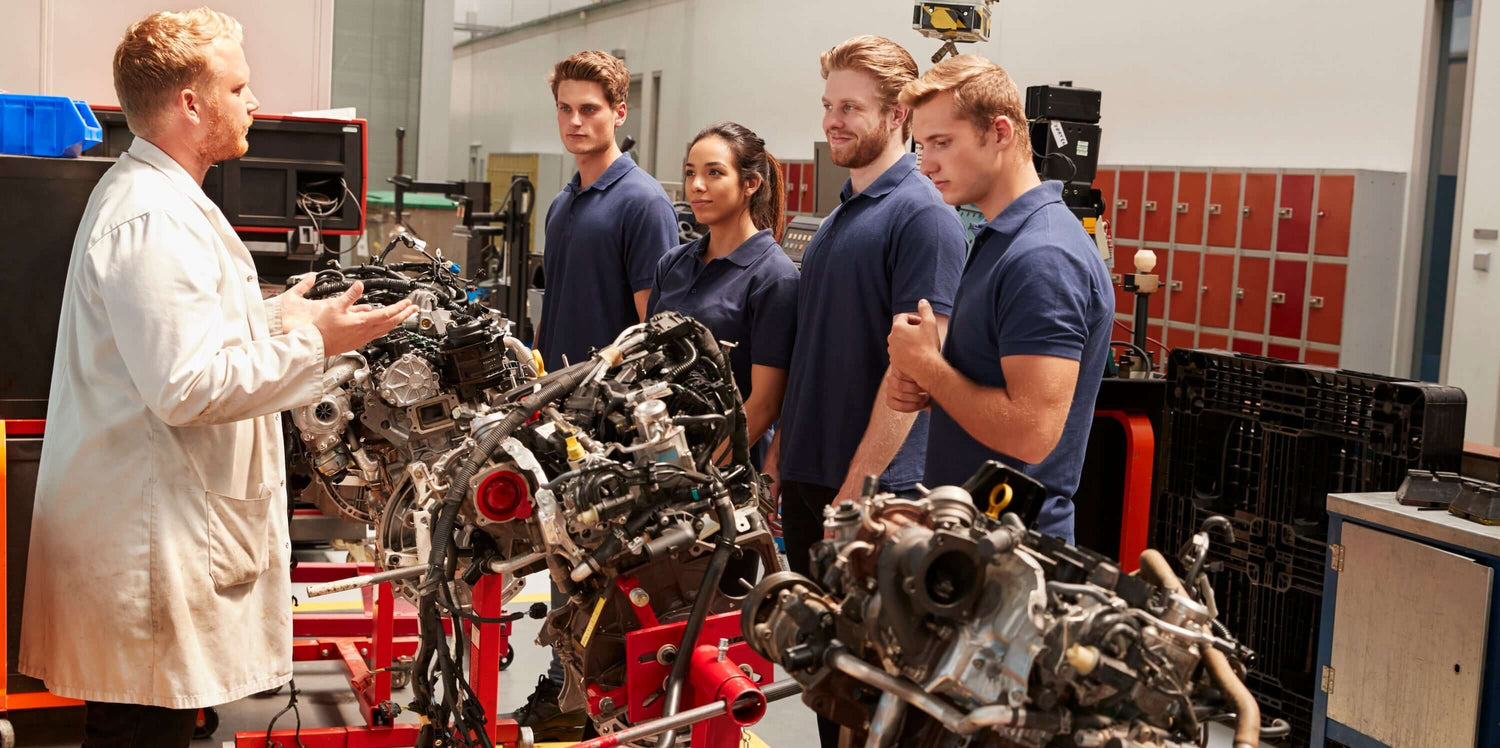
El motor turbo EA888 de 2.0 litros de Volkswagen y Audi es uno de los motores más utilizados en el mercado moderno. Se encuentra en el Golf GTI y el Golf R, el Audi A3, A4, A5, A6, Q3, Q5, S3 y TT, y ha pasado por varias generaciones que cambiaron sustancialmente el motor. Si estás buscando un reemplazo, la generación y el código de letra del motor lo deciden todo.
Generación por generación
Gen 2 (aproximadamente 2008-2014)
El EA888 Gen 2, con códigos como CCTA, CAE, CETA y CDA, es la versión que la mayoría de la gente conoce por dos problemas específicos: el consumo de aceite causado por el diseño del segmento del pistón y el comportamiento del PCV, y la falla del tensor de la cadena de distribución. El diseño temprano del tensor podía permitir que la cadena saltara, y en un motor de interferencia eso significa válvulas dobladas. Muchos de estos motores se actualizaron posteriormente con un tensor revisado, y cualquier Gen 2 que compres o conserves debería tener la pieza más reciente.
Gen 3 (aproximadamente 2015 en adelante)
El motor Gen 3, con códigos como CJX, CYFB, CYFA, DJJA y DLRA, fue un rediseño significativo: paredes del bloque más delgadas, un diseño de turbo rotado, un colector de escape integrado en la culata, y tanto inyección directa como inyección en el puerto en muchas variantes. La configuración de doble inyección reduce drásticamente el problema de acumulación de carbono en la válvula de admisión que afectaba a los motores anteriores solo de inyección directa. Esta es la generación detrás del Golf R de 292-310 hp y el Audi S3.
Qué sigue saliendo mal
- Consumo de aceite en motores Gen 2, a veces un cuarto cada 1,000 millas. Los anillos y el sistema PCV son los culpables habituales.
- Tensor de la cadena de distribución en Gen 2. Un traqueteo al arrancar en frío o al apagar es una advertencia que no debes posponer.
- Acumulación de carbono en variantes solo de inyección directa, lo que provoca ralentí inestable y fallos de encendido.
- Fugas en la bomba de agua y la carcasa del termostato, comunes en ambas generaciones porque las carcasas son de plástico.
- Problemas con el turbo y la válvula desviadora, especialmente en coches modificados.
- Desgaste de los cojinetes de biela en motores muy modificados. Un EA888 de serie es duradero; uno agresivamente modificado exige mucho del extremo inferior.
Por qué el código de letra importa más que la insignia
Dos coches con la misma insignia 2.0T pueden necesitar motores completamente diferentes. Un Audi A4 de 2012 con un CAE y un A4 de 2015 con un CPM son construcciones diferentes, y un S3 con un CJX es diferente de nuevo. Cuando hagas un pedido, trabaja con el código de letra del motor estampado en el bloque o listado en tus registros de servicio, no solo con la cilindrada y el año del modelo.
Referencia rápida de compatibilidad del EA888
| Años | Modelo | Códigos | Motor completo |
|---|---|---|---|
| 2015-2019 | VW Golf R Mk7 | CYFB / DJJA / DLRA / CJX (Gen 3) | Ver motor |
| 2015-2020 | Audi S3 | CYFA / DJJA / DLRA / CJX (Gen 3) | Ver motor |
| 2016-2018 | Audi A6 | CYN / CJX (Gen 3) | Ver motor |
| 2016-2023 | Audi TT Quattro | CYF / CJX / DLR (Gen 3) | Ver motor |
| 2013-2016 | Audi A4 | CPM | Ver motor |
| 2013-2016 | Audi A5 | CPM | Ver motor |
| 2013-2017 | Audi Q5 | CPM | Ver motor |
| 2009-2012 | Audi A4 | CAE (Gen 2) | Ver motor |
| 2011-2014 | Audi TT | CAE / CETA (Gen 2) | Ver motor |
| 2008-2014 | VW Golf GTI | CCTA / CCZ (Gen 2) | Ver motor |
Consulta la colección completa de motores VW y Audi 2.0T EA888 para ver la disponibilidad actual en todas las generaciones.
Notas de instalación para un 2.0T
- Reemplaza la bomba de agua y la carcasa del termostato mientras el motor esté fuera. Las carcasas de plástico son un punto de fuga conocido y la mano de obra ya está pagada.
- Inspecciona el turbo y limpia el intercooler y las tuberías de carga si el motor viejo consumía aceite.
- En un Gen 2, verifica que el tensor de la cadena de distribución sea el diseño actualizado.
- Utiliza la especificación de aceite correcta para el código de tu motor y no alargues el intervalo.
- Los motores se envían como bloques largos desnudos, por lo que los accesorios, colectores y sensores se transfieren. La instalación certificada por ASE dentro de los 30 días mantiene la garantía de 6 meses válida.
Preguntas frecuentes
¿Puedo poner un motor Gen 3 en un coche Gen 2?
No como un simple intercambio. La gestión del motor, el cableado, el diseño de la refrigeración y el montaje difieren. Pide la generación con la que se construyó tu coche.
¿Es el motor del Golf R el mismo que el motor del Audi S3?
Son parientes extremadamente cercanos de la misma familia Gen 3 con conjuntos de códigos compartidos, pero los accesorios, soportes y calibración son específicos para cada aplicación. Haz el pedido para tu coche.
¿Por qué mi 2.0T quema tanto aceite?
En los motores Gen 2, suele ser una combinación de anillos y comportamiento del PCV. Revisa primero el PCV porque es mucho más barato que la alternativa, luego mide el consumo en una distancia conocida antes de decidir.
Mi motor traquetea un segundo al arrancar. ¿Es grave?
En un EA888 Gen 2, esa es la advertencia clásica del tensor de la cadena. Soluciónalo de inmediato; una cadena saltada en un motor de interferencia dobla las válvulas.
¿Los motores modificados anulan la garantía?
La cobertura de la garantía asume condiciones de conducción normales y excluye las carreras y el uso bajo carga pesada, por lo que una aplicación muy modificada está fuera del alcance de la cobertura. Habla con nosotros antes de hacer el pedido si el coche está modificado.
¿Listo para reemplazarlo?
Si tu EA888 está quemando aceite, traqueteando al arrancar o ya ha saltado una cadena, un bloque largo completo es la forma más limpia de volver a tener un coche saludable. Cada motor que vendemos es un bloque largo desnudo cubierto por una garantía escrita de 6 meses a partir de la fecha de entrega, y debe ser instalado dentro de los 30 días por un taller certificado por ASE para que esa cobertura siga siendo válida. Realizamos envíos por transporte desde nuestro almacén de Hawthorne, Nueva Jersey, a los 48 estados contiguos, con opciones de elevador y residencia al finalizar la compra, o puedes recogerlo localmente. ¿No estás seguro de qué código de motor necesitas? Llámanos al 877-900-2695 (de lunes a viernes, de 8 a.m. a 5 p.m. ET) o utiliza Encuentra tu motor y lo haremos coincidir con tu VIN.
Explora la colección VW y Audi 2.0T EA888, todos los motores Volkswagen, los motores Audi o los motores turbo.