Volkswagen engine installations sit in their own specific corner of the US aftermarket. The platforms span small turbocharged four-cylinders that have powered enthusiast favorites for decades, the VR6 family that bridged inline and V6 architectures in a distinctive way, the more recent TSI and TFSI direct-injection turbo engines, and the TDI diesels that have a complicated post-Dieselgate compliance picture. Each family has its own specific install gotchas, and treating a VW engine swap like a generic four-cylinder swap is how shops end up with returns.
This 2026 guide is the playbook our techs use when a Volkswagen long block lands on the bay.
Identify What You're Installing
Volkswagen's engine catalog over the last twenty-five years includes several distinct families. The 1.8T (early 2000s through mid-2000s) in Jetta, GTI, Passat, and Audi applications. The 2.0T FSI and TSI (2006–present in multiple generations) in Jetta, GTI, GLI, Tiguan, Passat, and other applications. The VR6 family in Jetta, Passat, Touareg, and CC applications. The 2.5L five-cylinder (2005–2014) in Jetta, Golf, and Beetle applications. The TDI diesels (2.0L primarily, with various generations) in pre-Dieselgate Jetta, Golf, Passat, and other applications.
Each engine code follows VW's internal naming convention. The eighth character of the VW VIN is the engine code position, and VW's VIN decoder confirms the factory engine. Then physically inspect the engine and verify casting numbers match what the VIN says.
For 2.0T applications specifically, this matters substantially. The 2.0T family has gone through several generations — EA113, EA888 Gen 1, EA888 Gen 2, EA888 Gen 3, and current Gen 4 — with substantial internal differences. An EA113 from a 2008 GTI is not interchangeable with an EA888 Gen 3 from a 2018 GTI even though both are "2.0T VW engines."
Pre-Install Inspection
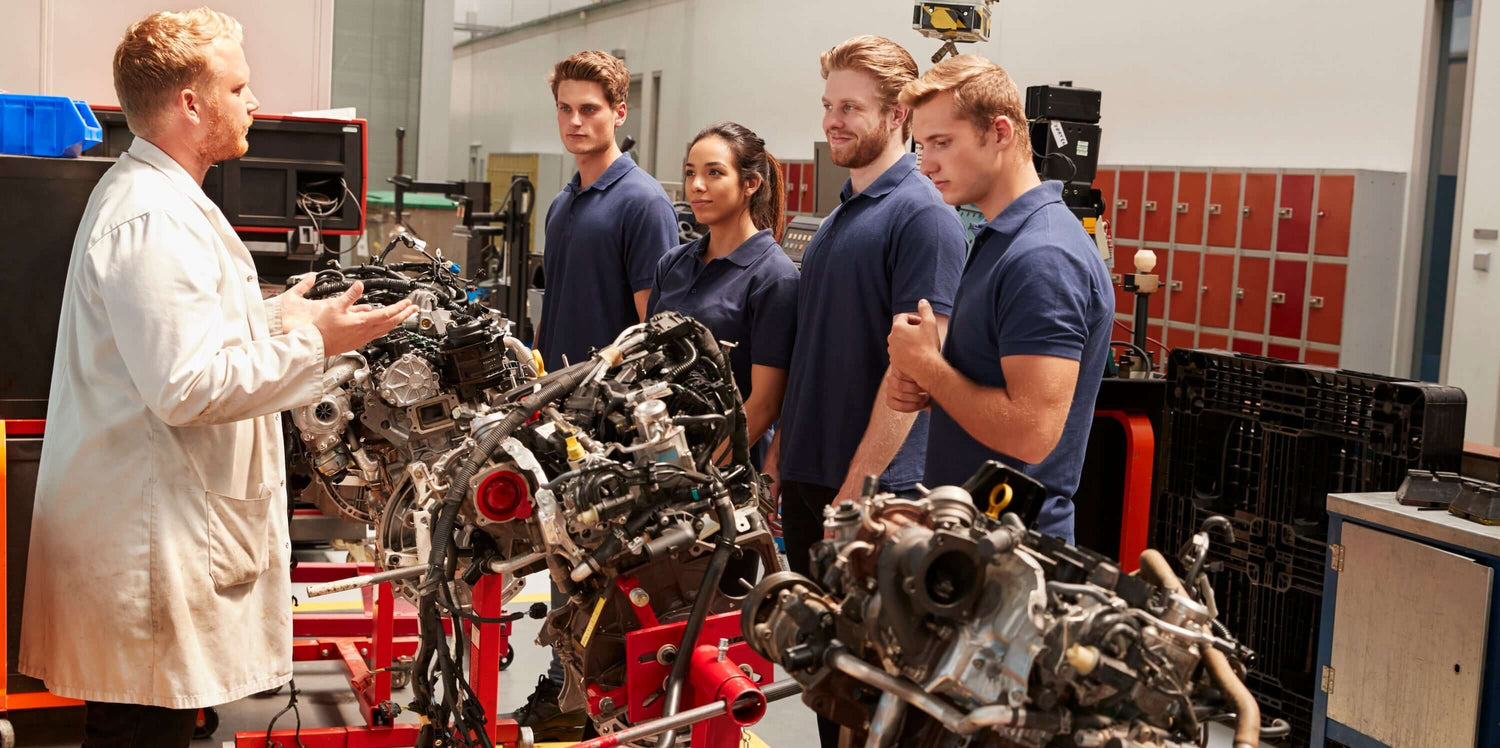
Inspect the replacement engine on the stand before installation. Rotate the crankshaft one full turn by hand. Feel for tight spots, listen for any internal contact, confirm timing marks haven't moved in transit.
For 2.0T applications specifically, evaluate the timing chain tensioner condition on a reman EA888 Gen 1 and Gen 2 unit. The original-spec tensioner is a documented weak point and a reman that didn't address it is shipping you a known future problem.
For 1.8T applications, evaluate the oil pickup sludging history if the donor engine had any maintenance issues. The 1.8T oil galleries are prone to sludging with anything less than diligent oil changes.
For TDI applications, the diesel-specific inspection scope is more involved — injector condition, HPFP condition, turbocharger health, and on emissions-equipped variants the DPF and SCR systems.
Pulling the Old Engine
VW engine bays vary by chassis. Transverse four-cylinder applications (most Jetta, Golf, GTI, Passat front-wheel-drive applications) drop the engine and transmission as an assembly through the bottom on most platforms, requiring a lift and subframe drop.
VR6 applications in transverse layout have tight engine bays. The longitudinal VR6 applications (older Passat, Audi-platform-derived) have more accessible engine bays.
For Tiguan and Atlas applications, the SUV-platform engine bays have additional accessibility considerations.
Disconnecting the Wiring
VW wiring connectors use VW-pattern locks that differ from typical American or Japanese designs. Photograph every connector. Label with painter's tape.
For 2.0T applications, the high-pressure fuel pump connector, the cam position sensors, the various coolant sensors, and the turbo-related connectors all need careful documentation.
For TDI applications, the diesel engine harness has additional connectors for the high-pressure fuel pump, individual injectors, EGR system, and on emissions-equipped variants the DPF and SCR systems.
Prepping the New Engine on the Stand
Transfer accessory brackets, alternator, water pump, A/C compressor, and any sensors not pre-installed. Use new VW-specific bolts where the service procedure specifies them.
For 2.0T applications, replace the spark plugs and consider the ignition coil condition. VW coils have known failure patterns on high-mile applications.
For 1.8T applications, this is the right time to address the oil pickup if the platform has sludging history.
Install a new oil filter and pre-fill the oil galleries.
The Drop-In
Lower the engine into the bay carefully. VW transverse engine bays are typically tight.
For applications where the engine and transmission come in as an assembly, the subframe goes back with the assembly. Subframe bolts torque to VW-specified values.
Wiring and First Start
Before the first crank, connect a VW-specific scan tool (VCDS, OBDeleven, or capable equivalent) and verify sensor data.
For VW direct-injection applications, verify HPFP pressure before the first start.
For the first crank, pull the fuel pump relay and crank for ten to fifteen seconds to build oil pressure.
For TDI applications, follow diesel-specific start procedure. Prime the fuel system, confirm rail pressure on the scan tool, then crank.
Reset fuel and let the engine fire. Don't rev. Watch the scan tool for the first five minutes of idle.
Break-In and First 500 Miles
Walk the customer through break-in. First 30 minutes of run time should be varied-speed driving in the 25–55 mph range. First 500 miles avoid full-throttle operation, sustained high RPM, and aggressive cold starts.
For 2.0T applications, avoid sustained boost pressure operation during the first 500 miles.
Schedule a 500-mile return for the first oil change. Use VW-specified oil. VW 502.00, 504.00, or 508.00 specifications for gasoline applications; VW 507.00 for TDI applications. Don't substitute generic oils.
What Sets Clean VW Installs Apart
VW engines reward methodical work. Verify casting numbers and engine codes. Address platform-specific known issues (2.0T timing chain tensioner, 1.8T oil galleries, TDI emissions equipment) in the rebuild scope or during the swap. Use VW-specific torque values. Use VW-specified oil.
For sourcing the long block, our Volkswagen engines catalog publishes casting numbers and platform fitment so the verification step happens before purchase.