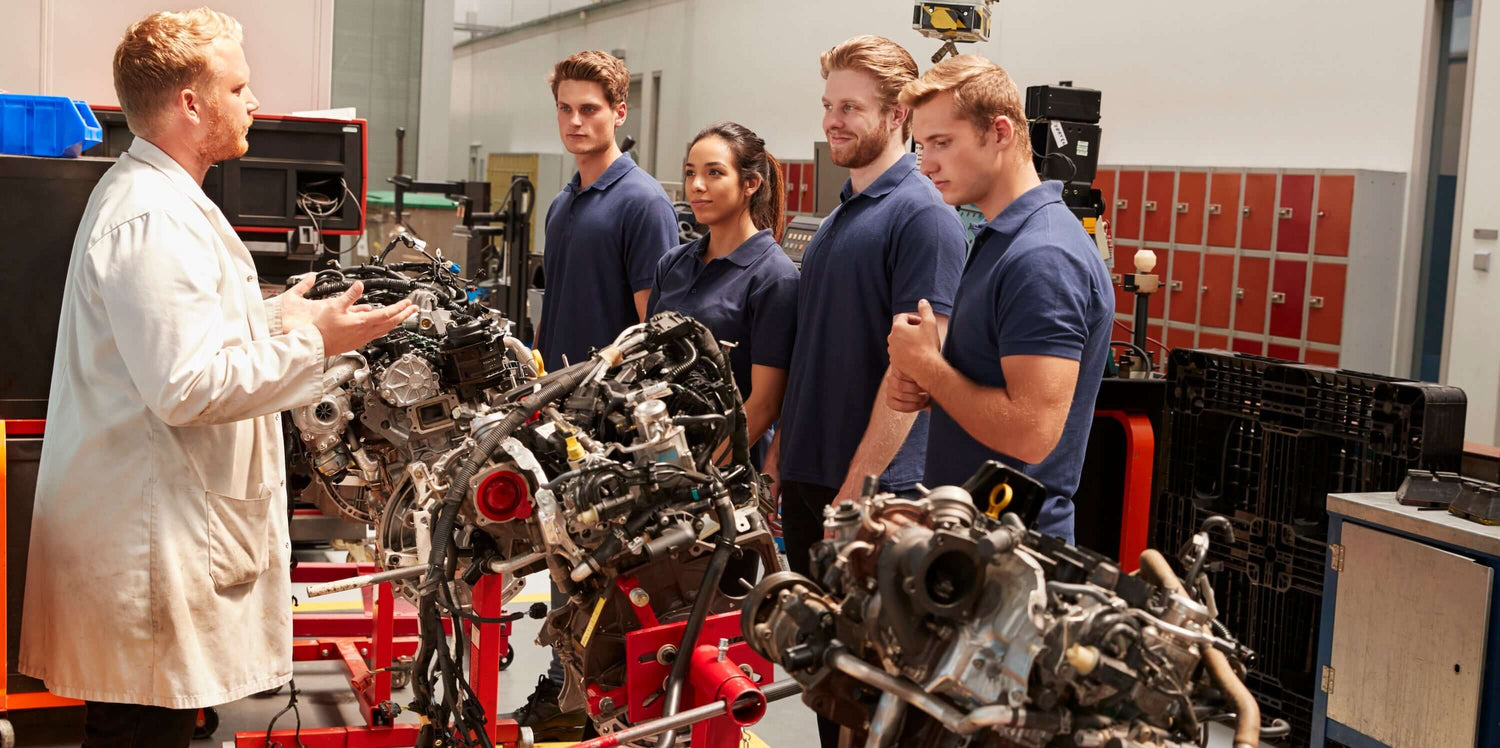

Pulling a Mitsubishi engine varies substantially by platform. The 4G63T in DSM and Evo applications has dedicated procedure in the enthusiast community. The 4D56 diesel in Pajero / Montero has its own specific considerations. The volume Mitsubishi applications follow conventional pull procedure with platform-specific notes. Below is the prep-and-removal sequence that experienced Mitsubishi shops use.
Before You Start
Have ready: clean workbench, zip-top bags and sharpie for fasteners, engine stand rated for at least 1,000 pounds with correct adapter, engine hoist with load leveler, transmission jack, drain pans, rags, good lighting.
Tools specific to Mitsubishi: standard metric sockets, Mitsubishi scan tool (MUT-III or aftermarket capable), torque wrench, harmonic balancer puller (for 4G63 / 6G72 / 4D56 belt-driven applications).
For 4G63T turbo work, additional: turbo manifold studs (often need replacement), banjo bolt copper crush washers.
For 4D56 diesel work, additional: injector puller, injector return line fittings, diesel-rated cleaner.
Step 1: Photograph Everything
Fifty to eighty photos covering wiring harness routing, vacuum line routing, intake plumbing (especially on turbocharged applications), accessory belt routing, exhaust connections.
For 4G63T applications, document boost reference lines, intercooler piping, BOV / blow-off valve connections. For 4D56 diesel applications, document fuel return lines, glow plug wiring, injection pump connections.
Step 2: Drain Fluids
Coolant first. Modern Mitsubishi: long-life pink (Diamond Coolant). Older Mitsubishi: green. Verify type before refill.
Engine oil second.
For 4D56 diesel applications, also drain fuel filter housing if planning to reuse.
Step 3: Battery and Fuel
Negative terminal first.
For 4G63T applications with aftermarket fuel systems (return-style high-pressure setups), relieve fuel pressure carefully, since these run higher pressures than OEM.
For 4D56 common-rail applications, fuel rail pressure can exceed 20,000 psi when engine is running but bleeds down to safe levels after shutdown. Wait 5-10 minutes after shutdown before any fuel line work.
Step 4: Remove Accessories
Air intake plumbing, air filter housing, MAF sensor (label connector). For 4G63T, intercooler piping and BOV. For 4B11T, the entire intake / intercooler assembly comes off in modules.
Alternator, A/C compressor, power steering pump, accessory belt tensioner.
Exhaust manifolds (with turbo on 4G63T applications: either remove turbo and manifold together or separately depending on access).
Step 5: Wiring Harness
Mitsubishi connector locks: tab-style, similar to other Japanese OEMs. Label every connector before disconnecting.
For 4G63T, special attention to: crank position sensor, cam position sensor, knock sensor, MAF (where present), TPS.
For 4D56 diesel, special attention to: injection pump connections, glow plug bus, fuel pressure sensors, EGR sensors.
Step 6: Cooling and Plumbing
Remove radiator, hoses, fan assembly. For 4G63T, also intercooler and associated plumbing. For some applications, AC condenser stays in chassis.
Step 7: Separate the Transmission
For automatic transmission applications, mark torque converter to flexplate position. Remove torque converter bolts through bell housing access.
For manual transmission applications, clutch and flywheel removal procedure depends on whether pulling engine and transmission together or separately.
Support the transmission with a jack stand.
Step 8: The Lift
Attach hoist chains to Mitsubishi-specified lift points. Most Mitsubishi engines have lifting eyes from factory.
For 4G63T with turbo still attached, balance the lift carefully, because the turbo hangs off the exhaust side.
Use a load leveler. Slow lift with frequent checks.
Step 9: Mount on Stand
For 4D56 diesel (heaviest at 450-550 pounds), use a rated stand. For inline-fours and V6 applications, standard automotive stands work.
Prep Tips for the Install
For 4G63T installs, verify timing belt and water pump are fresh on the new engine. If reman shipped with old service items, replace before install. The labor difference between doing it on the stand versus after install is substantial.
For 4D56 diesel installs, verify injectors are tested and within spec. Cleaning or replacing injectors during install is much easier than after.
For 6G72 installs, timing belt service is critical because it is an interference engine.
Sourcing from our Mitsubishi engine catalog with timing service documentation removes this question before the engine ships.