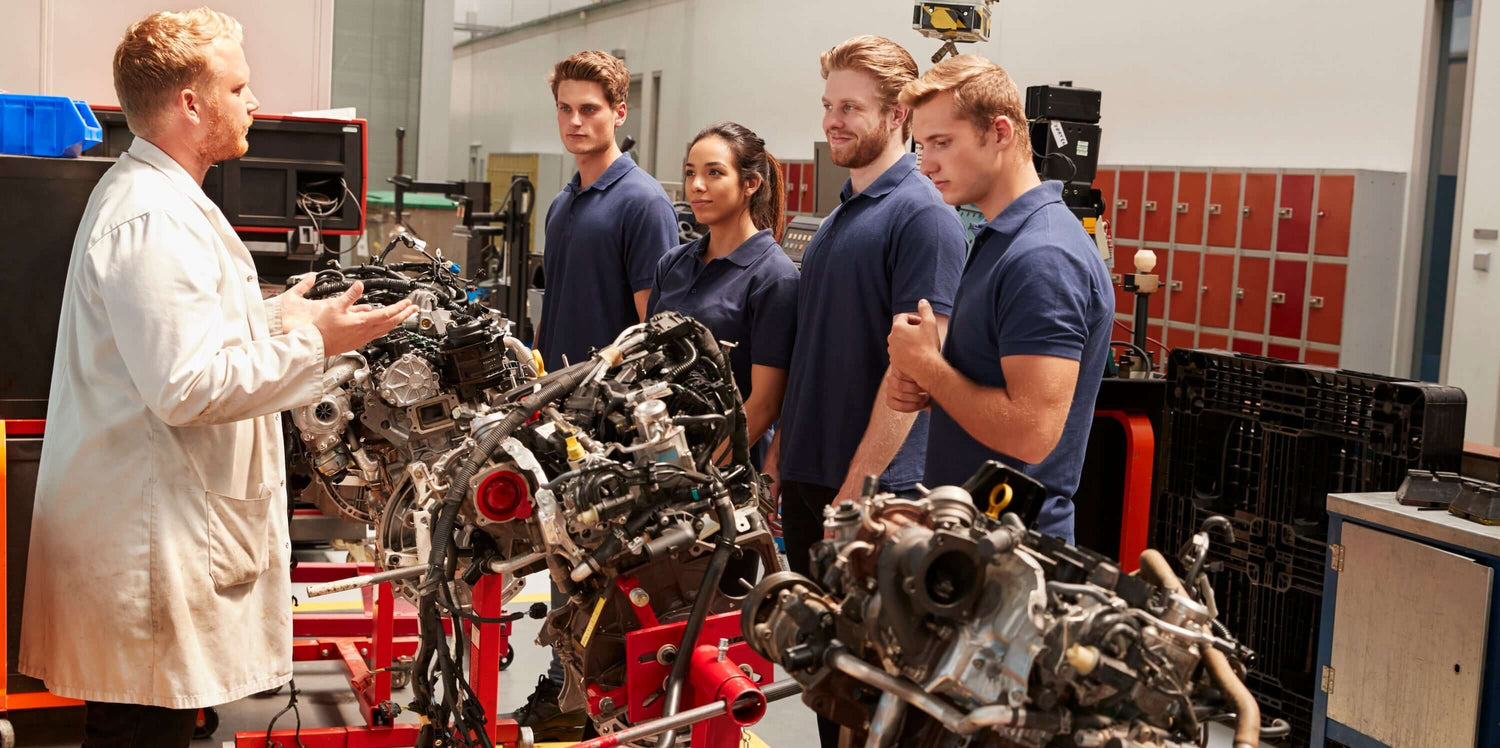
BMW engine swaps occupy a particular position in the US emissions compliance landscape. The BMW community includes a healthy population of enthusiasts who swap higher-performance engines into lower-spec chassis (N54 swaps into older 3-series, S55 into M3 platforms, S65 into other M-platforms), and the BMW M cars themselves represent some of the most sophisticated emissions equipment configurations on the road. The compliance picture varies substantially between same-year same-engine replacements and cross-chassis performance swaps.
This isn't legal advice — call your state DMV or local smog referee before money changes hands on anything ambitious — but here's the framework experienced shops use to keep BMW engine swaps street-legal in 2026.
The Federal Baseline
Federal law sets the floor. The Clean Air Act makes it illegal to remove, disable, or render inoperative any emissions control device the manufacturer installed on a vehicle being driven on public roads. That covers the catalytic converters (BMW typically uses multiple per engine), the EVAP system, the secondary air injection where equipped, the oxygen sensors, and the ECU calibration.
For BMW engine swaps, the federal rule that matters most: the replacement engine must bring all emissions equipment originally on it, and that equipment must be the same as or newer than what the vehicle was originally certified with.
Same-year same-engine BMW replacement is straightforward under federal rules. Cross-chassis or cross-year swaps require more careful compliance verification.
CARB States: California Plus Thirteen Others
CARB rules apply in California and thirteen other states. For BMW owners in these states, CARB compliance effectively governs whether the swap is legal.
For a same-year same-engine BMW replacement, CARB compliance is straightforward. Install the equivalent engine with all emissions components intact, document the work, and the swap clears smog like any other repair.
For year-mismatched or chassis-mismatched BMW swaps, CARB requires an Executive Order (EO) number specific to the swap configuration. EOs are issued by CARB after a particular engine-into-particular-vehicle combination has been tested and certified.
BMW swaps have less developed EO coverage than higher-volume swap configurations (like LS swaps and K-swaps). The BMW enthusiast community is large but the swap volume hasn't generated EO coverage for many popular configurations. For BMW owners in CARB states pursuing performance swaps, the EO availability is the determining factor for street legality.
The N54-into-Older-3-Series Question
One of the more common BMW performance swap configurations is dropping an N54 twin-turbo into an older 3-series chassis (E46, earlier E90). The mechanical work is well-documented and the BMW community has substantial experience with the conversion.
The emissions compliance picture is more complicated. In CARB states, this swap typically requires an EO that doesn't yet exist for most year-and-chassis combinations. Without EO coverage, the swap isn't legal for street use in CARB states regardless of how clean the installation is.
In non-CARB states, the federal rule applies. A newer N54 engine into an older 3-series is generally legal under federal rules as long as all the N54's emissions equipment stays intact.
The M-Engine Swap Question
Dropping an M-platform engine (S65, S55, S62) into a non-M chassis is a popular performance project. S65 into older 3-series, S55 into older M3 platforms, S62 into older 5-series.
Same emissions compliance considerations apply. In CARB states, EO coverage is the determining factor. In non-CARB states, the federal rule requires all emissions equipment from the donor M-engine to stay intact.
For off-road and competition use, these swaps are legal anywhere. Street use requires the EO or federal-compliance path.
The European-Spec Engine Question
BMW engines from European donor vehicles sometimes appear in the US aftermarket. The compatibility complication is real — European emissions specifications differ from US in ways that affect catalytic converter design, EVAP system configuration, and ECU calibration.
For street-legal use in the US in 2026, a European-spec BMW engine generally requires retrofitting US-spec emissions equipment to match what the vehicle was originally certified with. The work isn't impossible but it's specialist work and the cost can exceed the cost difference that made the European engine attractive in the first place.
The Tune Question on BMW Performance Engines
BMW performance engines (N54, N55, S55) are particularly responsive to ECU tuning, and the tune market is mature. Stage 1 tunes for N54 deliver 75–100+ horsepower gains over stock with just a flash. Stage 2 and Stage 3 tunes add more.
The emissions compliance picture on tuned BMWs is the same as for any other tune: any tune that affects emissions equipment operation is technically non-compliant with the Clean Air Act. CARB has issued specific guidance on this. Whether enforcement reaches the individual tuned BMW varies by state and by the specific changes the tune makes.
For owners who want a performance tune and need to pass emissions inspection, off-and-on tuning (loading the performance tune for daily use, reverting to stock for inspection) is the practical compromise. It's not legally clean but it's how a substantial portion of the BMW tune market operates.
OBD-II Readiness After a BMW Swap
For BMW vehicles from 1996 onward, OBD-II readiness is part of inspection. After an engine swap, monitors reset to not-ready and need to come back to ready through a specific drive cycle.
BMW drive cycles can be longer than American or Japanese engines because of the BMW-specific monitor implementations. Plan for 100–300 miles of mixed driving before all monitors reliably set.
For BMW twin-turbo applications (N54, S55), the catalyst readiness monitor can take additional drive cycles to set. Don't attempt state inspection until the scan tool confirms ready on all applicable monitors.
Documentation
Records that matter for any BMW engine swap defense: invoice and bill of sale including engine code and casting numbers; the supplier's full warranty document; emissions equipment verification (catalytic converters, O2 sensors, EVAP, secondary air injection where applicable); post-install OBD-II readiness scan; and in CARB states, EO number plus EO sticker installed on the engine.
Keep all of that in the customer file for the life of the vehicle.
The Catalytic Converter Question
BMW catalytic converters are expensive even by industry standards — OEM replacement converters for some applications run $1,500–$3,000 each, and BMW V8 applications have two to four converters per engine.
Federal law requires the converter to match or exceed original certification. CARB states require OEM or CARB-EO-approved aftermarket. Quote the converter into the job up front for CARB-state customers.
The Workflow That Avoids Trouble
The shops that don't have BMW compliance problems all follow the same workflow. Start with the customer's state and county. Confirm CARB or non-CARB jurisdiction. Confirm inspection regime.
Quote the swap as a same-year same-engine replacement whenever possible. Sourcing options from a BMW engine catalog with documented fitment makes this step cleaner than picking through generic listings.
For year-mismatched, chassis-mismatched, or M-engine swap configurations, do the EO lookup or DMV call before money changes hands. Put the answer in writing. If the swap isn't legally streetable in their state, the customer gets that information up front.
For European-spec engines, verify emissions compatibility before purchase. The cost differential between European-spec and US-spec engines often disappears once the US emissions retrofit costs are included.
Document everything. The BMW community is well-informed and customers expect transparent paperwork. Shops that provide it tend to keep customers for the long term.