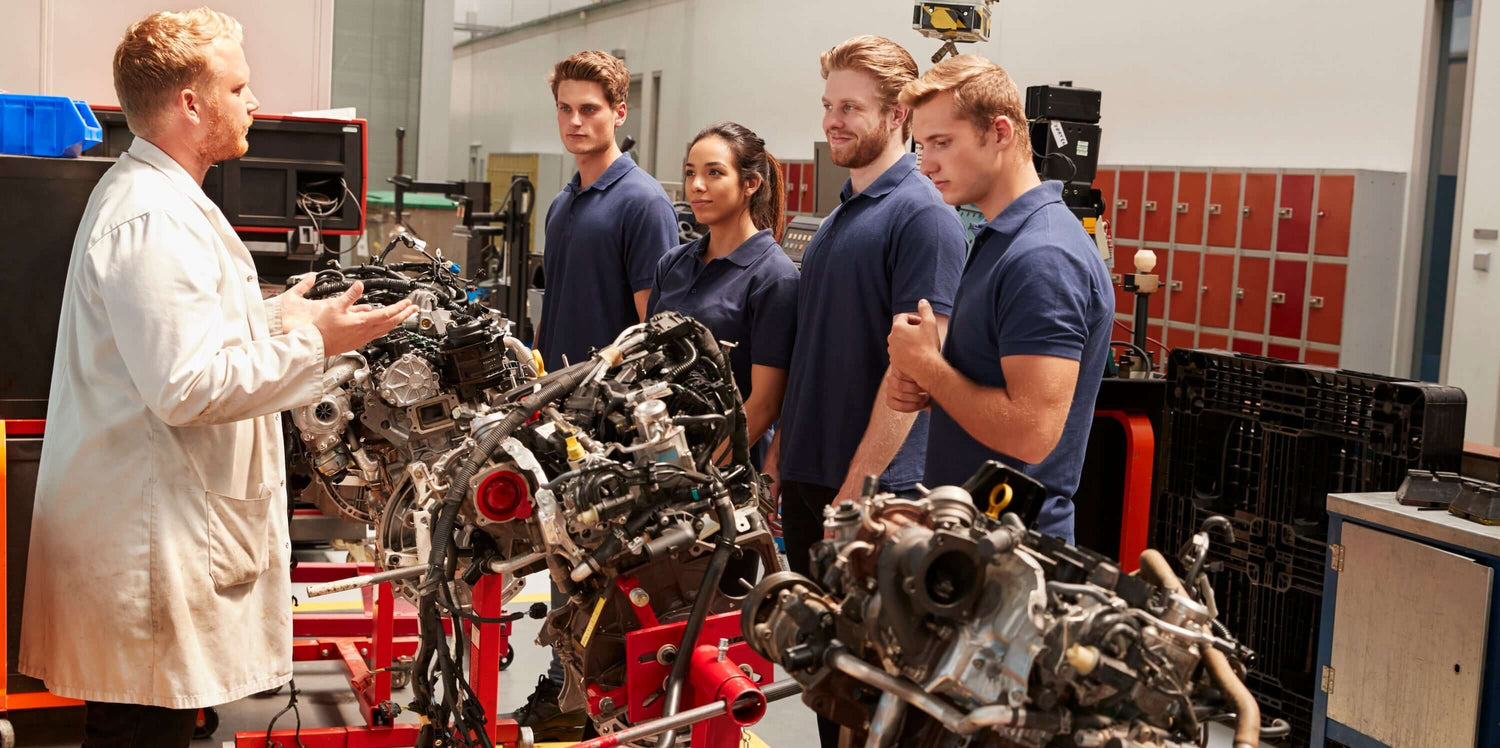

The mechanical side of a Lincoln engine install is the part most shops feel comfortable with. The electrical side is where projects stall. Modern Lincolns run more electrical communication between the engine and the rest of the vehicle than most techs initially expect — active engine mounts, premium audio integration, advanced driver assistance systems that share data with the powertrain modules, and the standard CAN bus network that ties everything together. A mechanically perfect install can still refuse to start, throw cascading codes, or fail to clear inspection if the wiring and ECU work isn't right.
Here's the playbook our techs use to keep Lincoln engine swaps from spending an extra week on the diagnostic lift.
What the Lincoln PCM Is Actually Doing
Modern Lincoln engines don't operate independently. The PCM is one of multiple modules on the CAN bus network, all communicating constantly. The transmission control module needs engine torque data to manage shifting on the 6R80 and 10R80 automatics. The ABS and stability control modules compare wheel speed against engine RPM. The body control module needs to recognize the engine as the one expected for this vehicle. The instrument cluster needs coolant temp, oil pressure, and other parameters for the driver display.
On Lincoln applications specifically, additional modules complicate the picture. Active engine mounts on certain platforms (Continental, MKZ Hybrid, Aviator GT) have their own control module that communicates with the PCM. Premium audio systems route through the network in ways that can be affected by powertrain wiring changes. Advanced driver assistance features like adaptive cruise control depend on accurate engine data through the bus.
A wiring fault on a Lincoln rarely produces just one symptom. A bad ground at the engine block can cause no-crank, transmission shift errors, ABS warnings, and stereo system glitches simultaneously — all from one underlying issue. Diagnostic time on cascading symptoms is expensive. Getting the wiring right the first time is the cheaper option.
Battery, Grounds, and Power Supply
The basics save the most money on installs that don't come back. Replace battery cables that show any corrosion, fraying, or heat damage. Used cables from a vehicle with prior engine problems have often spent time under high-resistance load — they look fine but fail intermittently after the swap.
Engine grounds matter more on Lincolns than people give them credit for. Most Lincoln engines have three to five ground connections between the engine and the chassis: the main battery ground to the block, a body ground from the engine bay to the firewall, a chassis ground at one or both frame rails, sometimes additional grounds at the cylinder head and the alternator bracket. Every one of those needs cleaning to bare metal, a fresh terminal, dielectric grease on the contact face, and proper torque on the fastener.
Loose or corroded grounds produce the largest single category of intermittent post-swap electrical problems on Lincoln platforms. Symptoms range from random check engine lights to no-crank conditions to weird instrument cluster behavior to premium audio glitches. Clean grounds eliminate the whole category.
Connector Discipline
Lincoln wiring harnesses use Ford connector designs but with additional connectors for premium features. The route to disaster is rushing the disconnect-and-reconnect sequence.
During removal, label every connector with painter's tape and a sharpie noting what it plugs into and where it routes. Photograph every connector in place before disconnecting. Photograph the routing of the harness. More photos than seem necessary.
During reinstallation, work to your labels and photos, not from memory. When two connectors look identical, check the wire colors entering the connector against the photograph. Lincoln connectors that look identical usually have different wire colors at the harness end — that's the tell.
Most Lincoln connectors use a primary press-tab and a secondary slide-lock that must be set after the connector is engaged. A connector that's engaged but with the secondary lock unset will appear seated but vibrate loose during operation. Confirm the secondary lock on every connector as part of the reassembly checklist.
The Main Engine Harness Connection
Most modern Lincolns route the engine harness through a bulkhead connector at the firewall. This is the single most important connector on the entire installation.
Inspect both halves before mating. Look for pushed-back pins, corrosion, water intrusion, or heat staining. A bulkhead with even one bad pin produces faults that look mechanical — misfires, no-starts, ABS warnings — because the affected circuit's signal is intermittent.
Mate the bulkhead with even pressure across the connector face. Don't use the locking lever to force the connector together if it's misaligned. Confirm visual alignment first, then engage the locking mechanism. Set the secondary lock.
Year-Mismatched Swap Considerations
If you're installing an engine from a different model year, the harness compatibility check is critical.
Same-engine-family swaps within a small year range generally have plug-and-play compatibility. Same-family swaps across larger year gaps often do not — Lincoln revised connectors and pin assignments multiple times across the Modular V8, Cyclone V6, and EcoBoost production runs.
The clean approach for year-mismatched same-family swaps is to use the harness that came with the donor engine and address the body-side connection through a documented adapter or careful pin-by-pin verification. Trying to mate a different-year engine to the vehicle's existing harness without verification is how multi-week troubleshooting projects start.
PCM Programming and Calibration
The PCM side of a Lincoln engine swap depends on what changed.
Same-year same-family engine replacement: the existing PCM usually accepts the new engine without reprogramming. Clear stored fault codes, complete the readiness drive cycle, and the PCM adapts to the new engine's specific behavior over the first few hundred miles.
Same-family swap across years: the PCM may need reprogramming with a Ford IDS or equivalent diagnostic tool to update calibration. Lincoln-specific calibrations differ from Ford calibrations even when the underlying engine is mechanically identical — transmission shift maps, emissions equipment calibration, and idle behavior all have Lincoln-specific tuning. Don't use a generic Ford calibration on a Lincoln vehicle.
Platform-mismatched swaps: a re-flashed PCM or standalone aftermarket ECU is usually required. This is custom work and a specialist who knows the specific swap is non-negotiable.
PATS Immobilizer Considerations
Lincoln vehicles use Ford's PATS (Passive Anti-Theft System) immobilizer, which prevents the engine from starting unless the PCM recognizes the body-side security module's signal. After an engine swap involving a PCM change, PATS can lock the engine out of starting until the immobilizer is re-paired.
For same-engine same-vehicle swaps where the original PCM stays in place, PATS rarely creates an issue. For swaps where a different PCM is installed, PATS re-pairing is typically a Ford dealer procedure or a specialized shop with PATS programming capability. Plan for it in advance.
The First Crank Procedure
Before turning the key, do an electrical pre-flight. Scan tool connected, key on engine off. Verify every sensor the PCM expects is reporting a sensible value. Coolant temp matches ambient. Intake air temp matches ambient. Oil pressure reads zero. MAP reads atmospheric pressure. All O2 sensors read inactive (cold) values. Crank and cam position sensors are present in the data list.
Any sensor reading out of range tells you to find the wire before turning the key. Tracking down a sensor fault before crank takes minutes. Tracking it down after the engine has fired takes much longer.
For the first crank, pull the fuel pump relay and crank for ten to fifteen seconds to build oil pressure. Watch the gauge or data parameter — you want at least 25 psi within ten seconds. Reset fuel and let the engine fire on the second attempt. Don't rev. Let it find idle.
Drive Cycle and Readiness
For OBD-II readiness on a Lincoln, the drive cycle involves a cold start, a five-minute warm-up at idle, mixed-speed driving in the 25–55 mph range, sustained highway driving at 55–65 mph for at least 10 minutes, and a deceleration phase back to a stop. The specific pattern varies by model year and emissions configuration.
For 3.5L EcoBoost applications specifically, the drive cycle can take longer because the catalyst readiness monitor on twin-turbo engines requires more specific operating conditions to set. Plan accordingly.
Plan for 50–200 miles of mixed driving before all readiness monitors set to ready. Don't attempt state inspection until the scan tool confirms ready status on all applicable monitors.
What Separates Clean Lincoln Installs
The wiring and ECU side of a Lincoln engine installation is methodical work, not exciting work. The installers who consistently produce clean swaps don't have secret techniques — they just don't skip the boring parts. Clean grounds. Careful connector handling. Pre-crank sensor verification. Disciplined drive cycle completion.
And they source engines from suppliers who document harness compatibility upfront. The Lincoln engines in our catalog specify which year ranges and platforms each unit is compatible with, which removes a layer of uncertainty before the install starts. The electrical work is much easier when the engine that showed up matches what the listing said it would.