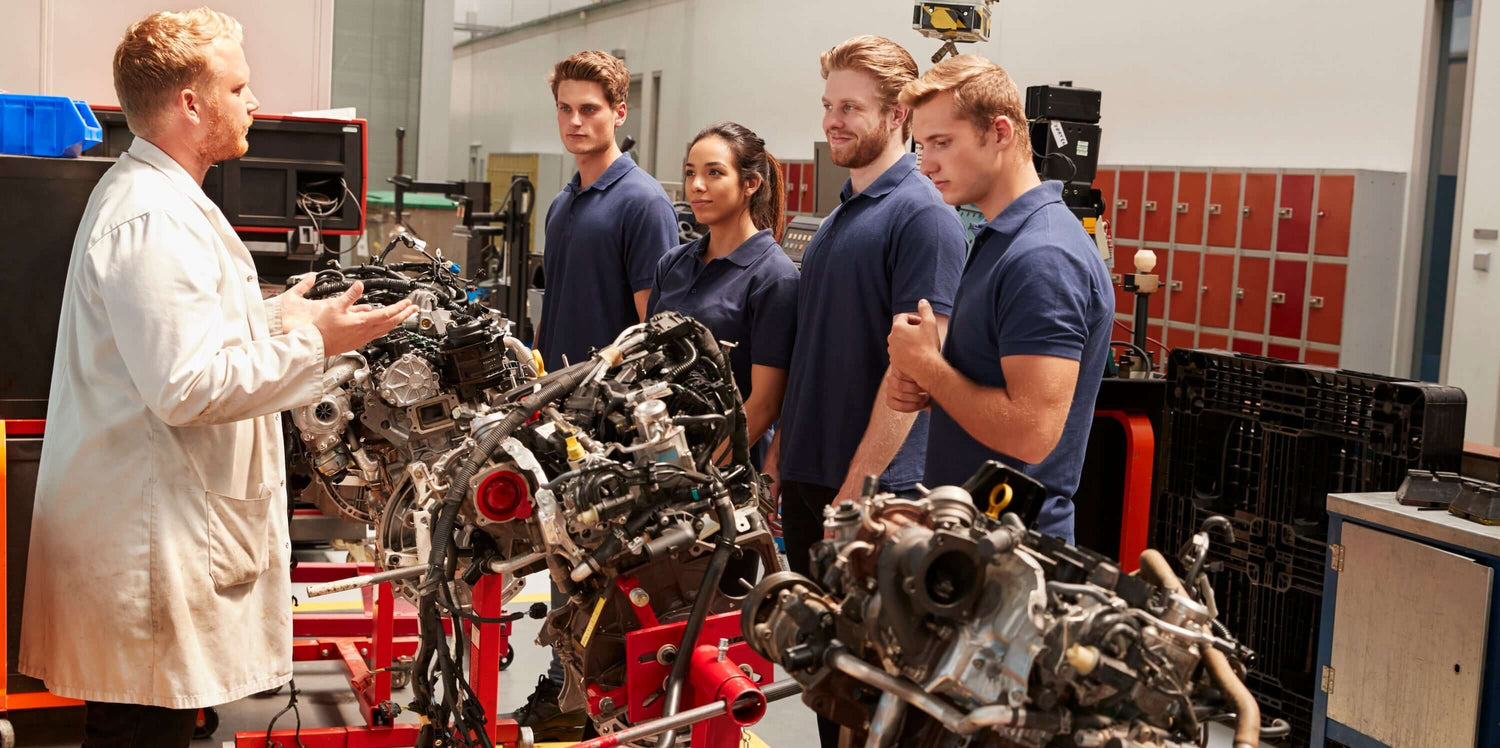

The mechanical side of a Jeep engine installation is the part DIY enthusiasts feel comfortable with. The wiring and ECU side is where most projects either come together cleanly or stall for weeks. Modern Jeeps run more electrical communication between the engine and the rest of the vehicle than most enthusiasts realize, and a swap that's mechanically perfect can still refuse to start if the electrical work is wrong.
Here's what experienced installers actually do to keep the electrical side of a Jeep engine swap from becoming a project unto itself.
Understand What the ECU Is Doing
Modern Jeep engines don't run independently. The engine ECU is one of a half-dozen modules on the vehicle's CAN bus network, all talking to each other constantly. The transmission control module needs engine torque data to manage shifting. The ABS module needs wheel speed compared against engine RPM. The body control module needs to confirm the engine is the one expected for this vehicle before it lets the security system unlock. The instrument cluster needs everything from coolant temperature to oil pressure to display correctly.
That web of communication means a wiring mistake doesn't just create a single fault — it can cascade into symptoms that look unrelated. A bad ground at the engine block can produce no-crank conditions, transmission shift errors, and ABS warnings all at the same time. Diagnostic time on cascading symptoms is expensive. Doing the wiring right the first time is much cheaper than chasing ghosts later.
Battery, Ground, and Power Supply
Start with the basics that get overlooked the most often. The battery cables, the engine grounds, and the main power feeds to the engine bay are the foundation that everything else depends on.
Replace battery cables if they show any corrosion, fraying, or heat damage. Used cables from a vehicle with engine problems have often spent time under high resistance load — they look fine externally and fail intermittently after the swap. The cost of new cables is trivial. The cost of chasing a starter-circuit fault is not.
Engine grounds matter more than people give them credit for. There are typically three to five ground connections between the engine and the chassis: the main battery ground to the block, a body ground from the engine bay to the firewall, a chassis ground at one or both frame rails, and on some platforms additional grounds at the cylinder head and the alternator bracket. Every one of those gets cleaned to bare metal, gets a fresh terminal, and gets dielectric grease on the contact face before reassembly.
Loose or corroded grounds are the single most common cause of intermittent post-swap electrical problems. The symptoms range from random check engine lights to no-crank to bizarre instrument cluster behavior. Clean grounds eliminate the entire category.
Connector Discipline
The wiring harness on a modern Jeep engine has somewhere between 30 and 60 individual connectors depending on the platform. Half of them look almost identical to half a dozen others. The route to disaster is rushing the disconnect-and-reconnect sequence.
During removal: label every connector with a piece of tape and a permanent marker. Note what it plugs into and where it routes. Photograph every connector in place before disconnecting it. Photograph the routing. Take more photos than you think you need.
During reinstallation: work to your labels and photos, not to memory. When two connectors look identical, check the wire colors entering the connector against the photograph. Almost-identical connectors usually have different wire colors at the harness end, and that's how you tell them apart at the bench.
Connector locks deserve attention. Most modern Jeep connectors have a primary lock (the visible release tab) and a secondary lock (a smaller slide or flap that has to be set after the connector is engaged). A connector that's engaged but with the secondary lock not set will appear seated but vibrate loose during operation, producing intermittent faults that are hard to diagnose. Set every secondary lock as part of the reassembly checklist.
Sensor Reconnection Order
The order in which you reconnect sensors matters less than the discipline of confirming each one before moving to the next. Walk the harness from the back of the engine forward. Cam position sensor (or sensors on multi-cam engines). Crank position sensor. Coolant temperature sensor. Intake air temperature sensor. MAP sensor. Oxygen sensors. Knock sensors. Oil pressure sensor. Variable valve timing solenoids on engines that have them.
For each connector, confirm the locking tab is fully engaged and the secondary lock (where present) is set. If a connector won't fully engage, stop and figure out why. Forcing a misaligned connector is how pins get bent and how faults get permanent.
The Main Engine Harness Connection
Most modern Jeeps route the engine harness through a bulkhead connector that mates the engine-side wiring to the body-side wiring. This is the single most important connector on the entire installation.
Before mating the bulkhead, inspect both halves carefully. Look for pushed-back pins, corrosion, water intrusion damage, or any sign that the connector has been heat-stressed. A bulkhead with even one bad pin will produce faults that look mechanical — misfires, no-starts, ABS warnings — because the affected circuit's signal is intermittent.
Mate the bulkhead with even pressure across the connector face. Don't use the locking screw or lever to draw the connector together if it's misaligned. Confirm visual alignment first, then engage the locking mechanism. Set the secondary lock.
Year-Mismatched Swap Considerations
If you're installing an engine from a different model year than the vehicle, the harness compatibility check becomes critical.
Same-engine-family swaps within a small year range (e.g., a 2014 Pentastar into a 2015 vehicle) usually have plug-and-play harness compatibility. Same-family swaps across larger year gaps (e.g., a 2012 Pentastar into a 2018 vehicle) frequently do not — connectors have been revised, pin assignments have changed, and what looks like plug-and-play is actually plug-and-don't-start.
The clean approach for year-mismatched same-family swaps is to use the harness that came with the donor engine, and to address the body-side connection through a documented adapter or a careful pin-by-pin verification. Trying to mate a different-year engine to the vehicle's existing harness without verification is how multi-week troubleshooting projects start.
Platform-mismatched swaps — a Pentastar into an older Wrangler with a 4.0L, for example — typically require either a standalone engine harness (one that runs the engine without depending on the body-side network) or a complete vehicle re-wire. This is a different conversation from a same-family swap and is beyond the scope of a typical home installation.
ECU Programming and Calibration
The ECU side of a Jeep engine swap depends on what kind of ECU you're working with and what got swapped.
For a same-year, same-family engine replacement: the existing ECU usually accepts the new engine without reprogramming, because the calibration is for the engine family rather than a specific physical engine. Clear stored fault codes after installation, complete the readiness drive cycle, and the ECU adapts to the new engine's specific behavior over the first few hundred miles.
For a same-family swap across years: the ECU may need reprogramming to match the new engine's calibration. Some swaps are plug-and-play. Some require a flash from a dealer or qualified independent shop. The supplier's documentation should tell you which.
For platform-mismatched swaps: a standalone ECU or a re-flashed donor ECU is usually required. This is custom work, and a qualified tuner who specializes in the specific swap is non-negotiable.
Immobilizer and Security Considerations
Modern Jeeps have factory immobilizer systems that prevent the engine from starting unless the ECU recognizes the body-side security module's signal. After certain engine swaps, especially those involving an ECU change, the immobilizer can lock the engine out of starting until it's re-paired with the vehicle.
For same-engine, same-vehicle swaps where the original ECU stays in place, the immobilizer rarely creates a problem. For swaps where a different ECU is installed, immobilizer re-pairing is typically a dealer or specialized-shop procedure. Plan for it in advance — discovering the immobilizer lockout after the install is complete is a frustrating way to end a project.
The First Crank Procedure
Before the first crank, do an electrical pre-flight. Key on engine off, scan tool plugged in. Verify every sensor the ECU expects is reporting a plausible value: coolant temp matches ambient, intake air temp matches ambient, oil pressure reads zero (engine not running), MAP reads atmospheric pressure, all O2 sensors read the inactive (cold) value, crank and cam sensors are present in the data list.
Any sensor reading out of range or missing entirely tells you to find the wire before you turn the key. Tracking down a sensor fault before crank takes minutes. Tracking it down after the engine has fired and accumulated additional codes takes much longer.
For the first crank, pull the fuel pump fuse or relay and crank for ten to fifteen seconds to build oil pressure. Confirm pressure on the gauge before fueling and firing. Reset the fuel system, crank, and let it idle.
Post-Start Diagnostic Routine
After the engine fires, the first five minutes of idle time are diagnostic gold. Don't rev it. Don't move the vehicle. Just watch.
Scan tool active: monitor short-term and long-term fuel trims, coolant temp climb rate, oxygen sensor switching, idle RPM stability, and any pending fault codes. Healthy fuel trims after a fresh install run within plus or minus 5 percent for short-term trim and within plus or minus 10 percent for long-term trim. Trims outside those ranges point to vacuum leaks, sensor issues, or fueling problems that need addressing before the vehicle leaves the bay.
Re-scan after five minutes of run time. Address any pending codes before clearing them — a pending code that comes back after clearing is real, not a remnant of the installation process. A pending code that doesn't return is housekeeping that the readiness drive cycle will clean up.
The Drive Cycle
For OBD-II readiness, the Jeep needs to complete a specific drive cycle pattern. The exact pattern varies by Jeep model year but generally involves a cold start, a five-minute warm-up at idle, a stretch of varied-speed driving in the 25–55 mph range, a sustained highway segment at 55–65 mph for at least 10 minutes, and a deceleration phase from highway speed back to a stop.
Plan for 50–200 miles of mixed driving before all readiness monitors set to ready. Don't try to take the vehicle for state inspection until the scan tool confirms ready status on all eight (or relevant subset for the platform) readiness monitors. An inspection failure resets the clock and adds another inspection fee.
What Separates Clean Installs From Comebacks
The electrical and ECU side of a Jeep engine installation is methodical work, not exciting work. The installers who consistently turn out clean swaps don't have secret techniques — they just don't skip the boring parts. Clean grounds. Careful connector handling. Pre-crank sensor verification. Disciplined drive cycle completion.
And they source engines from suppliers who document the harness compatibility upfront. The Jeep engines in our catalog specify which year ranges and platforms each unit is compatible with, which removes a layer of uncertainty before the install starts. Doing the electrical work right is much easier when the engine showed up matching what the listing said it would.