Mercedes-Benz engine installations sit in their own particular space in the US aftermarket. The brand's lineup covers an enormous range of engines — from compact four-cylinders in entry-level applications through V8s, V12s, and AMG-built engines that represent some of the most engineering-intensive powerplants on the market. The platforms span four decades of production with substantial generational differences. A 1990s M104 inline-six is a different mechanical world than a 2020s M256 mild-hybrid inline-six. Treating them as the same job category is how shops end up with returns.
This 2026 guide is the playbook our techs reach for when a Mercedes long block lands on the bay.
Identify What You're Installing
Mercedes engine codes follow Mercedes conventions. The letter prefix (M for gasoline, OM for diesel) plus a three-digit code identifies the engine family. M104, M112, M113, M156, M157, M177, M256, M278 — each is a distinct family.
Within each family, variant suffixes identify specific configurations. M113K is the supercharged AMG variant of the M113. M177 vs M178 distinguishes specific AMG V8 configurations.
The seventeenth digit of the Mercedes VIN identifies the engine code position. Cross-reference against Mercedes's specification chart for the model year. Then physically check the engine identification stamp on the block. The stamp on most Mercedes engines is on the front of the block or on the bell housing flange.
The Major Mercedes Engine Families
The M272 V6 family (2004-2014) in C-class, E-class, ML, R-class, and other applications. The M273 V8 family in similar applications. The M112 V6 and M113 V8 earlier-production naturally-aspirated families. The M156 V8 AMG (2006-2012, naturally aspirated). The M157 V8 AMG (twin-turbo successor). The M278 V8 (twin-turbo non-AMG). The M177 V8 AMG (current AMG twin-turbo). The M256 inline-six (current naturally aspirated and turbocharged variants). The OM642 V6 diesel (2005-present in various US applications). The OM651 four-cylinder diesel.
Pre-Install Inspection
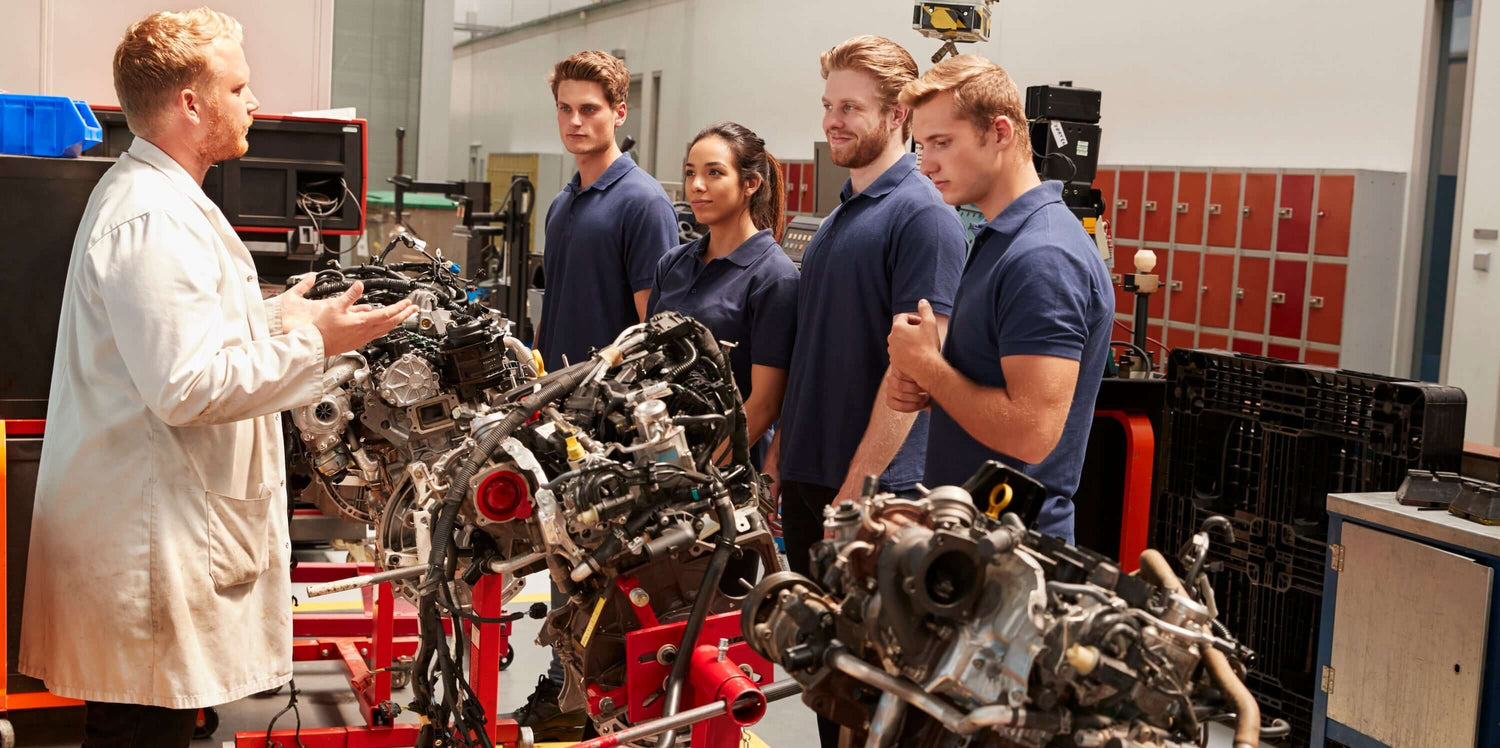
Inspect the replacement engine on the stand. Rotate the crankshaft one full turn by hand.
For M272 V6 applications, evaluate the timing chain idler gear condition. The M272 has documented idler gear wear in specific production years that should be addressed in any reman rebuild.
For M156 V8 AMG applications, evaluate the cylinder head bolt condition. The M156 has documented head bolt issues in specific production windows. Reman engines should address this in the rebuild scope.
For M157 and M178 twin-turbo applications, evaluate turbocharger condition on reman units.
For OM642 diesel applications, the swirl flap motor and intake manifold condition need verification — the swirl flap issue is well-documented on this engine family.
Pulling the Old Engine
Mercedes engine bays vary substantially by platform. Modern C-class and E-class applications have engines coming out from above with reasonable access. SUV applications (ML, GL, GLE) have tighter engine bays. AMG applications have additional cooling system complexity and exotic components that need careful handling.
For Mercedes diesel applications, the diesel-specific fuel system handling adds steps similar to other diesel engines.
Disconnecting the Wiring
Mercedes wiring connectors use Mercedes-pattern locks. Photograph every connector. Label with painter's tape.
For Mercedes direct-injection applications (M156, M157, M177, M256, M278), the high-pressure fuel pump connector requires careful handling.
The main engine harness routes through a firewall bulkhead on most Mercedes applications. Mercedes bulkhead connectors are particularly sensitive to pin damage — inspect carefully before mating.
Prepping the New Engine on the Stand
Transfer accessory brackets, alternator, A/C compressor. Use new Mercedes-specific bolts where the service procedure specifies. Mercedes uses substantial torque-to-yield fastener usage.
For AMG applications, the engine prep includes additional steps for the AMG-specific components.
The Drop-In
Lower the engine into the bay carefully. Mercedes engine bays are typically tight, particularly on AMG applications.
Wiring, Fuel, and First Start
Before the first crank, connect a Mercedes-specific scan tool (XENTRY, Star Diagnostic, or capable equivalent) and verify sensor data.
For Mercedes direct-injection applications, verify HPFP pressure before the first start.
For the first crank, pull the fuel pump relay and crank for ten to fifteen seconds to build oil pressure. Mercedes engines should show at least 25 psi within seven seconds.
For Mercedes diesel applications, follow diesel-specific start procedure. Prime fuel system. Confirm rail pressure on the scan tool. Then crank.
Reset fuel and let the engine fire. Don't rev. Watch the scan tool for the first five minutes of idle.
Break-In and First 500 Miles
Walk the customer through break-in. First 30 minutes of varied-speed driving in the 25–55 mph range. First 500 miles avoid full-throttle operation, sustained high RPM, and aggressive cold starts.
For AMG applications, the break-in is particularly important. AMG engines are precision-built and benefit from the full window before being asked to deliver AMG-level performance.
Schedule a 500-mile return for the first oil change. Use Mercedes-specified oil (MB 229.5, MB 229.51, or current spec for the engine).
What Sets Clean Mercedes Installs Apart
Verify casting numbers and engine codes. Address platform-specific known issues (M272 idler gear, M156 head bolts, OM642 swirl flaps) in the rebuild scope. Use Mercedes-specific torque values. Confirm sensor data before first crank with a Mercedes-capable scan tool.
For sourcing the long block, our Mercedes engines catalog publishes casting numbers and platform fitment so the verification step happens before purchase. The Mercedes market is precise. The supplier discipline needs to match it.