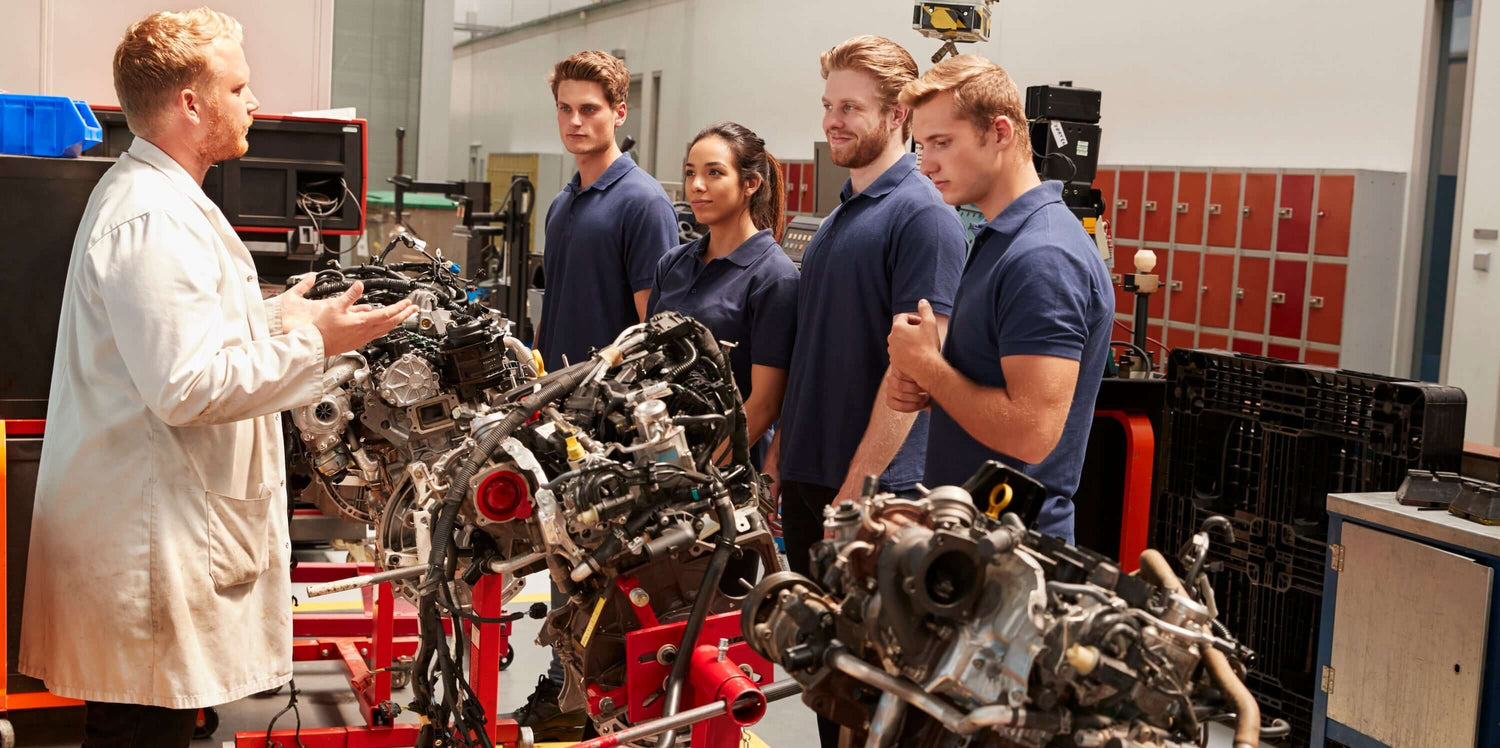

If you've pulled more than a handful of Jeep engines, you already know the drill never goes exactly the same way twice. A 4.0L straight-six out of an old XJ tells you one story. A 3.6L Pentastar out of a newer JL or JT tells you another. And the customer waiting on a 2.4L turbo wants their daily driver back yesterday. This guide is the playbook we wish someone had handed us a few jobs in — a no-nonsense Jeep engine installation guide built around what actually slows shops down in 2026: emissions paperwork, sensor calibration headaches, and parts that look identical until you check the casting number.
The goal here isn't to read like a service manual you'll never open again. It's to walk you through the order of operations that keeps a Jeep engine swap on schedule, from the moment the crate lands at your bay to the first 500 miles after handoff.
Before You Touch a Wrench: Pre-Install Checks
Most failed installs aren't failed installs. They're failed pre-installs. Spend a focused thirty minutes here and you'll save yourself a day later in the week.
Verify the long block against the customer's VIN
Sounds obvious. Still the most common reason an engine goes back on the pallet. Jeep ran multiple engine families in the same model year on more than one platform — the 3.6L Pentastar alone has had several head and intake revisions since 2011, and a 2014 JK block is not a drop-in for a 2018 JL even though the marketing materials sometimes blur that line. Pull the casting number on the block, cross-reference the head casting, and confirm the harness connector count matches what's on the bench.
Inspect the long block as it sits on the stand
Rotate the crank by hand at least one full revolution. You're feeling for tight spots, listening for anything brushing inside, and checking that the cam timing marks haven't shifted in transit. Pull the valve cover if it ships with one — better to find a bent pushrod or a missing rocker now than after the hood's back down.
Get your reusable parts cleaned and inspected
The flexplate, harmonic balancer, oil cooler lines, intake manifold (when reused), and accessory brackets all need to come off the old engine in working condition. Cracked exhaust manifolds on older 4.0L blocks are practically a tradition — confirm now whether you're sourcing a replacement, because finding one the day you're trying to button it up will cost you a half day.
Match the fluids and consumables to the engine you're installing
Pentastars want 5W-30 full synthetic in most applications. Older 4.0L straight-sixes still run happily on 10W-30 conventional. The 2.0L turbo introduced in the JL platform has its own oil and coolant spec sheet that doesn't overlap with the older inline-six. Don't assume; check.
Pulling the Old Engine
You've done a hundred R&Rs. We're not going to insult you with a torque-the-engine-mount-bolts lecture. But there are a few Jeep-specific gotchas worth flagging in 2026, because the platforms have aged and the parts around them have aged with them.
Drain everything you can reach
Coolant, oil, power steering if you're disturbing the pump, and on AWD/4WD applications, the transfer case fluid if you're separating the case. Pentastar oil filters live in the housing on top of the engine — easier to deal with up here than under the truck.
Disconnect, don't disturb, the wiring harness
Take photos. A lot of photos. The main engine harness on a 3.6L has connectors that look almost identical at the cam sensors, the oil pressure sender, and the variable valve timing solenoids. Tag them as you unplug. Future-you will thank present-you when you're chasing a misfire code two weeks from now.
Lift carefully — Jeep engine bays aren't generous
The JL platform especially is tight up front. The fan shroud, radiator, and condenser don't have a lot of clearance. Use a leveler. Pull the bumper if you have to. You'll save more time than you spend.
Prepping the New Engine on the Stand
This is the step that separates a clean install from a comeback. Don't lower an engine into a Jeep with parts you still need to put on.
Transfer over your accessory brackets, mount the alternator, A/C compressor, and power steering pump (if applicable) on the stand. Install the flexplate or flywheel with new bolts torqued in the correct sequence — Jeep flexplate bolts are not a place to save money on reuse. Mount the harmonic balancer, install a new oil filter, and pre-fill the oil galleries by spinning the oil pump with a drill on engines that allow it.
If the old intake manifold is going back on, this is the time to inspect it for cracks (common on older Pentastars around the EGR boss) and replace every gasket, O-ring, and seal that touches it. Saving twelve dollars on gaskets to come back in a month for a vacuum leak isn't a trade-off any shop owner wants to make.
The Drop-In
Once the engine's prepped, the actual install is the least dramatic part of the day. Lower it slowly, align the dowel pins to the bell housing, and bolt the transmission to the block before you let weight settle on the mounts. Engine mount bolts go in finger-tight first — torque only after you've got the transmission cross-member back in and everything's settled.
Reconnect coolant lines, fuel lines, A/C lines (if disturbed), exhaust, and finally the wiring harness. Work outside-in. The accessory connectors and ground straps that live deep in the engine bay get connected first, then you work your way out toward the main harness plug.
Wiring, ECU, and First Crank
This is where 2026 Jeep installs differ most from work you might have done a decade ago. Modern Jeeps don't tolerate a sloppy electrical reconnect.
Battery and ground checks
Confirm clean grounds at the block, the firewall, and the chassis. Corroded grounds are the single biggest source of phantom codes after an engine install. Clean them to bare metal, dielectric grease the contact face, and torque them properly.
Initial scan before crank
Plug your scan tool in, key on engine off, and check that every sensor the ECU expects is reporting. Cam and crank sensors, MAP, MAF (on applications that have one), coolant and intake air temp, oil pressure, knock. If any of those are missing or out of range before you crank, find the wire now — not after the engine's running rough at 1,500 RPM.
Crank, don't start
On the first turn, pull the fuel pump fuse or relay and crank for ten to fifteen seconds to build oil pressure. Confirm pressure on the gauge before you let it fire. This single step has saved more bearings than any other habit on this list.
Idle, listen, and scan
Let it idle. Don't rev it. Watch fuel trims, listen for anything mechanical that shouldn't be there, and re-scan for codes after about five minutes of run time. Address pending codes before the customer ever sees the truck.
The First 500 Miles
Most engine warranties — including ours on Jeep crate and remanufactured units — require a documented break-in. Walk your customer through it before they leave the lot.
The first 30 minutes of run time should be at varied RPM with no sustained idling. The first 500 miles, no full-throttle pulls, no towing, no cruise control. An oil change at 500 to 1,000 miles is standard practice on a fresh long block — even a factory-fresh engine sheds a small amount of break-in material in those first miles, and getting it out of the system early is cheap insurance.
Schedule the customer back for a torque-check on accessible fasteners and a follow-up scan around the 500-mile mark. It's a fifteen-minute appointment that catches small issues before they become warranty conversations.
Sourcing Notes for 2026
Engine sourcing has gotten harder, not easier, since 2024. Used 4.0L cores are drying up. Pentastar reman supply tightened when several Stellantis recalls pulled cores out of circulation. If you're spec'ing an engine for a customer, the smart move in 2026 is to confirm availability before you quote the job — not after.
For shops running multiple Jeep installs a month, building a relationship with a single supplier on our Jeep engines catalog tends to pay off in faster turnaround and predictable warranty handling. Mixed sourcing — one engine from here, the next from there — makes warranty claims and core returns harder to track when something does go wrong.
The Short Version
A Jeep engine installation that doesn't come back is mostly about discipline before the engine ever leaves the stand: verify, inspect, prep, and only then install. The cranking and the torque specs are the easy part. The pre-install checklist is what separates a Tuesday job from a Friday comeback.
Keep your photos, keep your scan logs, and document the break-in conversation in writing with the customer. The shops that run clean engine departments aren't faster wrench-turners — they're just more consistent about the boring parts.