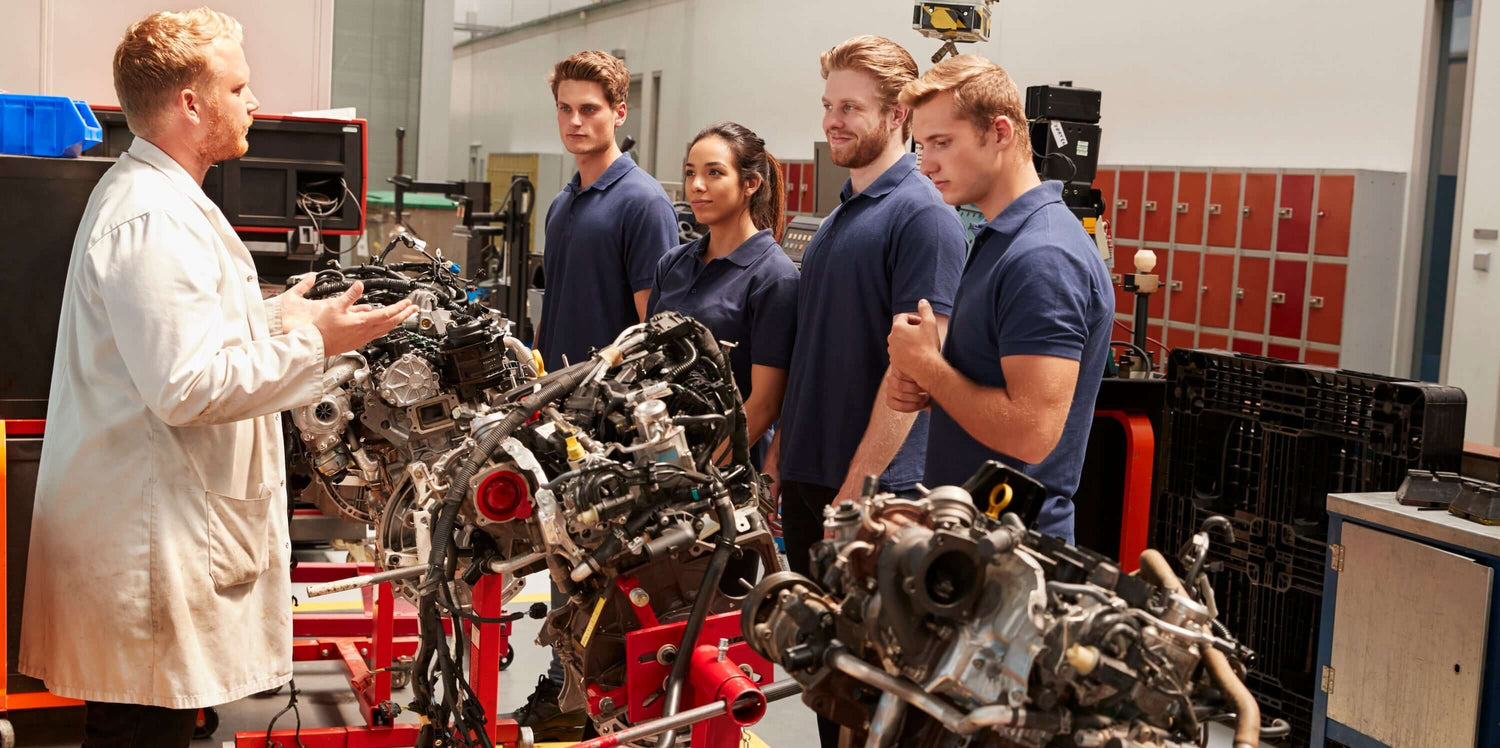

Dodge engines, particularly the modern HEMI and Pentastar families, have produced both legends and headaches over the last twenty years. The 5.7L HEMI in particular has accumulated a list of platform-specific failure modes that shop owners can recite from memory — the lifter tick, the cam failure, the MDS-related issues that show up at predictable mileage windows. Knowing which signs point to a swap versus which point to targeted repair is what keeps the customer conversation honest.
Here are the five signs that in 2026 most reliably point toward a Dodge engine replacement.
1. The 5.7L HEMI Lifter Tick That Won't Quiet
The 5.7L HEMI lifter issue is the most famous Dodge engine problem of the modern era. The MDS lifters fail — either the cylinder deactivation mechanism itself or the related roller followers — and produce a persistent tick from the top end that doesn't quiet with warm-up. Left ignored, the failure progresses: the affected lifter eventually destroys the camshaft lobe, and the engine moves from "ticking" to "misfiring" to "needs immediate attention."
Caught at the lifter-tick stage before cam damage has occurred, the repair is a substantial but legitimate fix — lifter replacement (typically all 16 lifters as a set), new rollers, fresh oil, possibly an MDS delete depending on the application. That's a 12–20 hour job at most shops.
Caught later, after cam damage has progressed, the repair becomes a full top-end teardown including the camshaft. At that point, the cost of repair approaches the cost of a complete long block replacement, and the swap is often the better answer. A fresh long block with addressed lifter components and a fresh cam is more predictable than a major rebuild on the existing block.
2. The 3.6L Pentastar Oil Cooler Leak with Cylinder Head History
The 3.6L Pentastar V6 in Charger, Challenger, Durango, and other Dodge applications has two related issues. The oil cooler housing develops leaks past 80,000–120,000 miles — a known and well-documented service item with a targeted repair. The left-bank cylinder heads on 2011–2013 production Pentastars have a documented failure pattern that produces ticking, misfires, and eventually catastrophic head failure.
For a Pentastar with just the oil cooler issue, the fix is a $400–$700 targeted repair. No engine swap needed.
For a 2011–2013 Pentastar with the left-bank head issue combined with oil cooler problems and accumulated mileage, the math shifts. The cylinder head repair alone runs $2,500–$4,500 in labor and parts, and there's no guarantee it'll solve all the issues simultaneously. A fresh long block at that point delivers a clean slate.
3. Cummins Diesel with Multiple Injection System Issues
The 5.9L Cummins and 6.7L Cummins diesels in Ram heavy-duty applications are legendary for durability — the bottom end of these engines routinely runs past 500,000 miles. But the supporting systems, particularly the high-pressure fueling and the emissions equipment on newer 6.7L variants, develop issues that can be expensive to address individually.
The pattern that points toward swap: a Cummins with multiple issues across injectors, the high-pressure fuel pump, and the emissions system simultaneously. The cost of addressing each individually adds up faster than customers expect, and a fresh long block plus refreshed fueling and emissions equipment can be more economical than chasing each issue separately.
For Cummins applications with a single specific issue — a failed injector, a worn turbocharger, an EGR cooler leak — the targeted repair is almost always the right answer. The underlying engine is too durable to justify replacement on most individual issues.
4. The 5.9L Magnum V8 with Exhaust Manifold Cracks and Mileage
The 5.9L Magnum V8 in older Ram and Durango applications is mechanically durable but has documented exhaust manifold cracking issues past 150,000 miles. The cracks produce exhaust leaks that affect drivability and emissions, and the manifold replacement itself is a substantial labor item due to the access challenge.
For a 5.9L Magnum with just the exhaust manifold issue, the fix is manifold replacement — not cheap, but not a swap-justifying problem on its own.
For a 5.9L Magnum past 200,000 miles with manifold cracks plus other accumulated high-mileage issues (oil consumption, valve seal leaks, weak compression on one or more cylinders), the swap math improves. The 5.9L Magnum is at the end of its production life and the parts ecosystem is shrinking. A fresh long block is sometimes more practical than chasing aging-engine repairs on a platform that's increasingly hard to source for.
5. The Pattern: Multiple Issues at Once
The fifth sign isn't a specific failure mode — it's the pattern. A Dodge engine with high mileage and one of the symptoms above is a candidate for targeted repair. The same engine with two or three symptoms at once is almost always past the point where targeted repairs make economic sense.
The pattern that points most clearly toward a swap: a primary failure mode for the engine family (HEMI lifter tick, Pentastar left-bank head issue, Cummins fueling problems, Magnum manifold cracks) combined with one or more secondary symptoms suggesting broader internal wear. Oil consumption climbing. A check engine light that keeps coming back with different codes. Rough idle that wasn't there a year ago. Reduced fuel economy with no diagnostic answer.
When three or more symptoms appear at once on a Dodge engine past 150,000 miles, chasing each individually is rarely the right financial answer.
The Math at Two Symptoms
For Dodge owners trying to make the decision honestly: at one clear symptom, a real diagnostic and a targeted repair quote is almost always the right next step. The cost of a $1,500–$3,500 targeted repair is much smaller than the cost of a $7,000–$12,000 engine swap, and a Dodge engine that responds well to a targeted repair often has thousands of miles of useful life left.
At two symptoms, the conversation shifts. The cost of chasing both individually, plus the risk that one of them doesn't actually fix the underlying issue, starts to overlap with the swap cost. Get written estimates for both paths and let the customer make an informed call.
At three or more symptoms, the math is usually clear. A swap.
The Diagnostic Workflow
The right workflow when multiple symptoms are present: a real diagnostic with compression test, leak-down test, oil analysis where applicable, borescope inspection where accessible, and a documented review of the engine's service history.
For 5.7L HEMI applications with suspected lifter or cam issues, a borescope inspection of the camshaft lobes through the spark plug or valve cover access is the highest-value diagnostic step. Visual confirmation of cam damage drives the decision tree definitively.
For Pentastar applications with suspected head issues, the misfire pattern combined with scan tool data tells you which side of the line you're on. A consistent left-bank misfire with the 2011–2013 head issue signature is a strong indicator.
For Cummins applications, fuel system pressure testing and injector return flow testing tell you whether the fueling system is the issue versus the engine itself.
What Comes Next
Once the diagnostic confirms a swap is the right answer, source the replacement from a supplier with documented warranty terms and verified casting number compatibility. The Dodge engines on our catalog are matched by engine family and platform fitment, and the listings disclose whether platform-specific known issues (HEMI lifters, Pentastar heads, Cummins fueling) have been addressed in the rebuild scope.