
Anyone planning a serious Nissan performance build has stood at the same fork in the road. Work the engine you have, or start with a fresh block? Both paths can produce great results. They don't produce the same results, and they don't carry the same risks. For most Nissan platforms, the answer the experienced builders have settled on is to start fresh — not because working a tired engine is impossible, but because the cost differential is smaller than it looks once you account for the diagnostic time and the comebacks you avoid.
Here's how Nissan performance builds get planned in 2026 when the budget can support doing it right.
Why a Fresh Block Matters More on Performance Builds
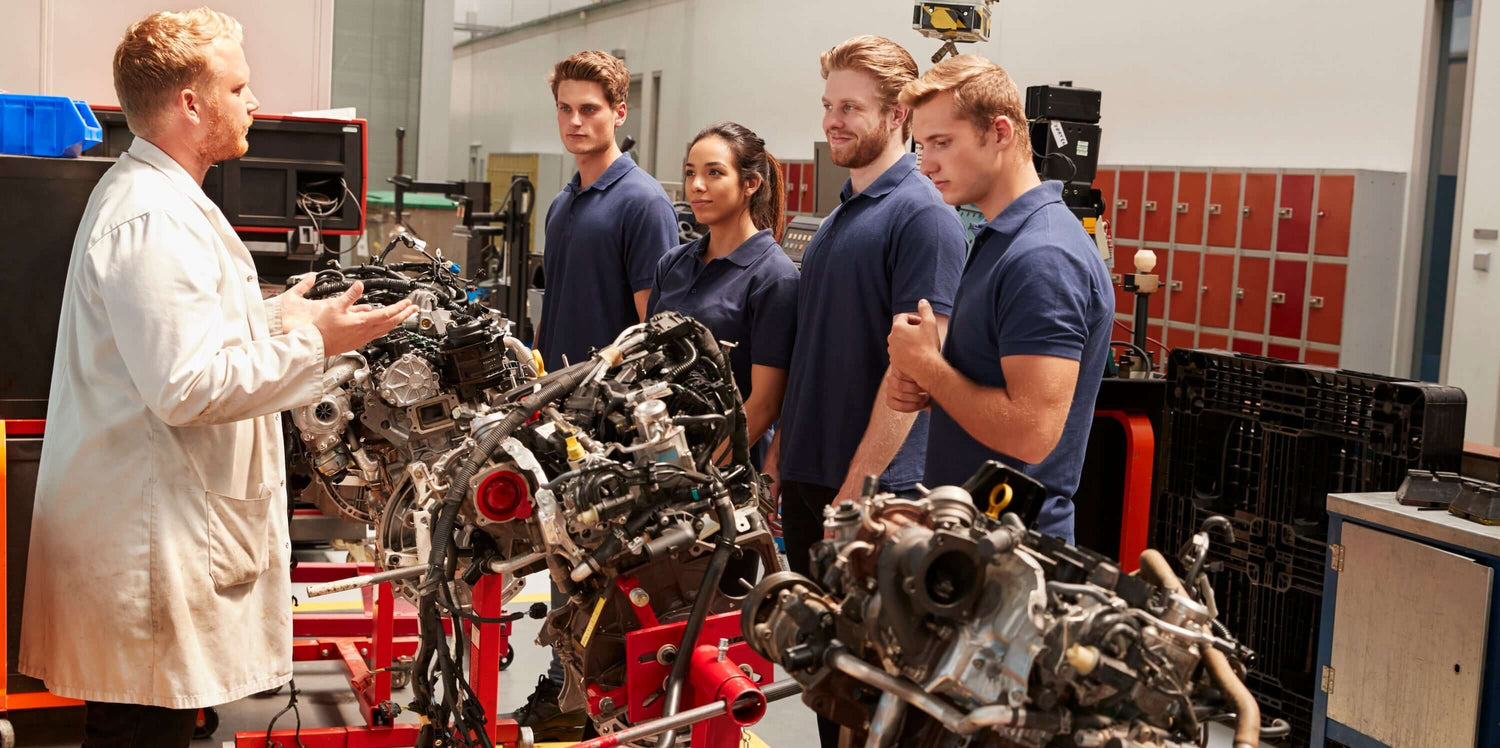
Every used Nissan engine carries some amount of unknown wear and some amount of unknown service history. The cylinder walls have measurable taper. The bearings have settled into specific clearance ranges. The rings have seated in a particular wear pattern that's now optimized for stock loads.
None of that is a problem at stock power levels. It becomes a problem fast when you're adding 50, 100, or 200 horsepower. The increased cylinder pressure exposes every internal weakness simultaneously. A bearing clearance that was fine at stock load develops oil starvation under boost. Rings that seated for naturally-aspirated operation can't seal turbocharged cylinder pressure. Cylinder walls with measurable taper produce blow-by under load that wouldn't show up in daily driving.
A fresh block eliminates those variables. Whatever you build on top of it has predictable behavior because the foundation is known. The first-time success rate of a Nissan performance build on a fresh engine is meaningfully higher than the same build on a used engine.
Platform Choice Matters
Not all Nissan engines are equally good performance starting points. The platform you're working on substantially determines what's possible and what's reasonable.
The VQ35DE and VQ35HR are among the most accessible Nissan performance platforms. Naturally aspirated bolt-on builds with cams, intake, exhaust, and tune reach 290–320 horsepower comfortably. Supercharged builds with appropriate fueling reach 400–500 horsepower reliably. Turbo builds can go further but require more substantial supporting work. The aftermarket is mature; parts are available; expertise is widespread.
The VQ37VHR is similar but adds the VVEL system, which both helps and complicates performance work. Cam selection has to account for VVEL operation. The platform is capable of 350–400 horsepower naturally aspirated with appropriate work, more with forced induction.
The VR30DDTT is the modern performance Nissan engine and responds well to bolt-on work. With a tune, downpipes, and an intercooler, the 3.0L twin-turbo reaches 450–500 horsepower at the wheels. Built-engine territory can go substantially further but requires significant internal work and fueling support.
The KA24DE is the classic budget performance platform, mostly because of the drift community's investment in the platform. Bolt-on power gains are modest, but the engine is forgiving of turbocharged conversions in the 250–350 horsepower range.
The QR25DE is the worst Nissan engine for performance work. The internals were not designed for sustained high-cylinder-pressure operation, and the oil consumption issue makes the platform unforgiving. Most QR25 performance projects end up as engine swap projects rather than worked-engine projects.
The Build Stack on a Fresh Nissan Crate Engine
The sequence of performance work that adds up to meaningful gains is fairly consistent across Nissan platforms.
Cam selection drives every other decision on naturally aspirated builds. Buy the cam from a reputable Nissan-specific supplier and follow the manufacturer's spec for supporting hardware — valve springs, retainers, pushrod or rocker geometry, depending on the engine. Mixing parts across cam profiles is where home builds go sideways.
Intake and exhaust are the next layer. A free-flowing intake manifold on platforms where one exists, a high-flow throttle body, and exhaust headers with primary tubing length matched to the cam profile. For the VQ engines specifically, the intake plenum and exhaust manifolds are common upgrade points with substantial gains available.
Fueling: performance gains demand more fuel. Upgraded injectors sized to your power target, a higher-flow fuel pump, and on serious builds a fuel rail with appropriate pressure regulation. Underfueling a built engine is how expensive projects become expensive paperweights.
The tune. A custom tune by a shop that knows the platform is non-negotiable on anything beyond very modest builds. Generic flash tunes work for stock-or-near-stock applications. The moment you've changed cam, intake, exhaust, and injectors, the engine needs calibration that matches what you actually built.
Forced Induction on a Nissan Engine
Most serious Nissan performance builds end up with some form of forced induction — either supercharger or turbo. The platform-specific kits available in 2026 are mature and well-supported.
Centrifugal supercharger kits for VQ35 platforms are bolt-on installations with documented power gains in the 400–500 horsepower range when paired with appropriate fueling. Twin-screw and roots-style superchargers are available for the same platforms with different power and response characteristics.
Turbo conversions on naturally aspirated Nissan engines are more involved. Custom or kit-based exhaust manifolds, the turbo and its plumbing, intercooler, blow-off valve, and the fueling and tuning to make it work. Done well, the result is substantial power. Done poorly, it's a sequence of expensive lessons.
Supporting Components That Don't Get Enough Attention
Nissan performance builds fail more often from supporting systems than from the engine itself.
Cooling: more horsepower equals more heat. A larger radiator, an upgraded oil cooler, and on serious builds an external transmission cooler. Running stock cooling on a built engine produces the heat soak issues that turn track days into trailer rides.
Transmission: Nissan automatic transmissions and CVTs were not designed for sustained operation at 30+ percent above stock torque. Manual transmission cars have an easier path forward, but clutch and pressure plate upgrades become mandatory at power levels much above stock.
Driveline: half-shafts and differentials have known limits. The factory units in most Nissan performance applications hold up to moderate power increases but become weak points on serious builds.
The Cost Reality
A serious Nissan performance build on a fresh crate engine typically runs $12,000–$22,000 all in, depending on platform and power target. The fresh long block is $3,500–$6,500 of that. Cam, valvetrain, intake, exhaust, fueling, and tune add another $4,000–$8,000. Forced induction kits run $3,500–$8,000 depending on platform and style. Supporting cooling, transmission, and driveline upgrades fill in the rest.
That's a real budget. It's also less than the alternative path of building on a tired engine, dealing with the failure when the bottom end gives up, paying for the diagnostic time to figure out what failed, and then doing the swap anyway. Doing it once on a known-good foundation is the cheaper long-term move on Nissan platforms.
Sourcing the Foundation
The crate engine you start with sets the ceiling for what the rest of the build can become. A performance build wants a documented long block with known internal specs, no prior overheat history, and warranty terms that survive reasonable modifications.
For most Nissan platforms, a remanufactured long block from a reputable rebuilder is the sweet spot — fresh internals, predictable cost, warranty coverage that doesn't fall apart the moment you bolt on a cam. The Nissan engines on our catalog publish warranty terms and internal specifications in detail, which is the information that matters when you're about to invest $15,000 or more into a build on top of the foundation.
Pick the foundation carefully. The bolt-ons are forgiving. The block is not.