
For Nissan owners staring down a tired engine, the rebuild-versus-replace decision rarely lands the way it does on other platforms. The economics of Nissan engine work in 2026 have specific quirks that push the answer toward replacement more often than the same conversation does for, say, a Jeep or a Ford. Knowing why — and when the rebuild path still makes sense — is what keeps the decision honest.
Here's the framework that shops use when a Nissan customer asks whether to rebuild what's in the bay or drop in a replacement.
Define the Two Paths
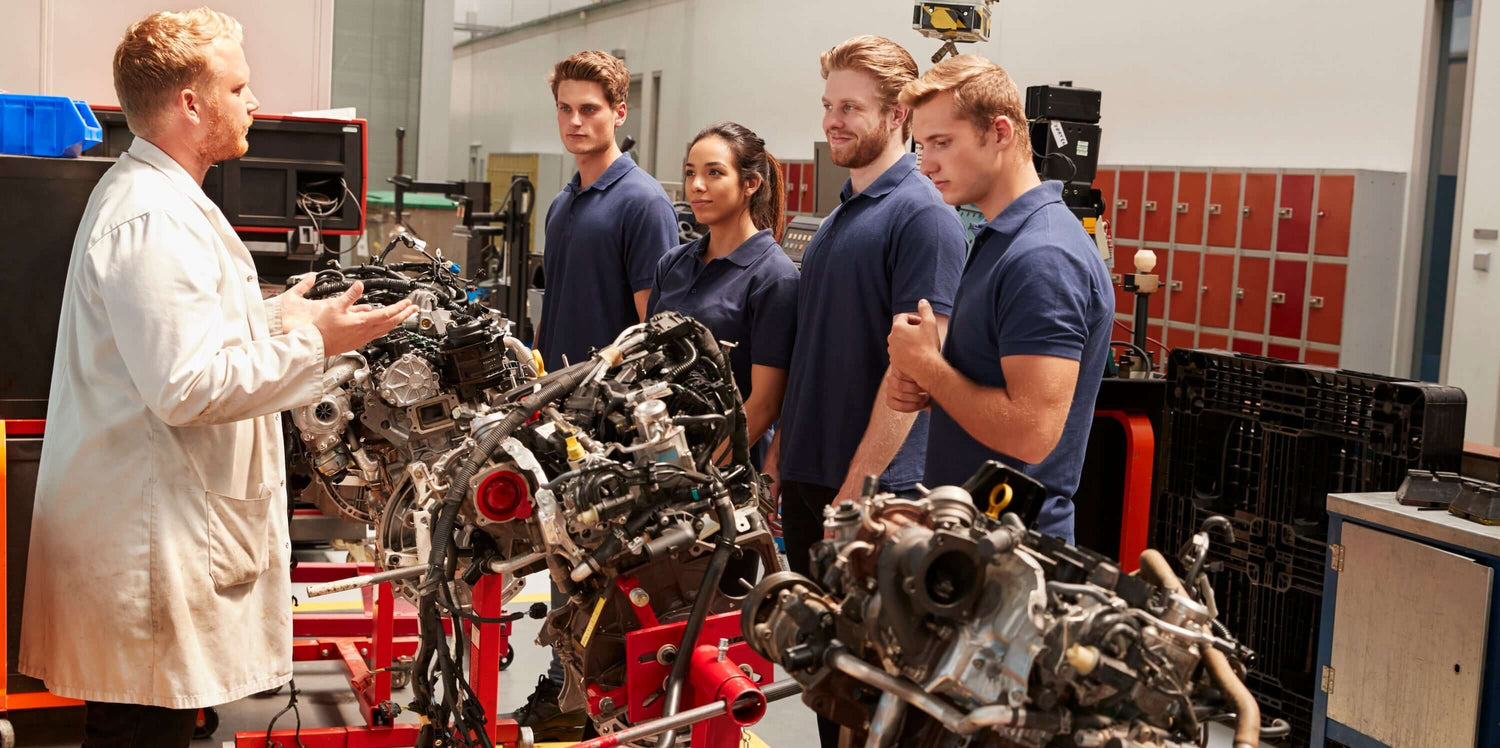
A rebuild on a Nissan engine means pulling the existing long block, tearing it down to its components, machining what needs machining (bore work, deck resurfacing, head work, valve job, crank polish or grind), replacing the wear items (rings, bearings, gaskets, oil pump, timing components on chain-driven engines), and reassembling. The original block stays. Everything else inside it is new or restored.
A replacement means installing a different long block. That can be a new crate engine (rare for Nissan platforms in 2026), a remanufactured unit from a reputable rebuilder, or a low-mileage used engine pulled from a documented donor vehicle. The original block leaves the shop and the accessories transfer over to the replacement.
These look like similar jobs and have very different cost profiles, time profiles, and warranty exposure.
The Cost Picture for Nissan Engines in 2026
For a VQ35DE V6 — the most common Nissan engine in the shop — a quality rebuild in 2026 typically runs $4,500–$7,500 in total. That covers the machine shop work, a master rebuild kit including new timing chain components, gaskets, bearings, fluids, and labor. The timing chain rebuild on a VQ adds meaningfully to the rebuild cost because it's a substantial sub-job in its own right.
For a QR25DE four-cylinder, the rebuild range is narrower: $3,500–$5,500 typically. Less complex valvetrain, less timing work, simpler bottom end. The challenge with QR25 rebuilds is that the engine's known oil consumption issue often originates in piston ring design, which means a rebuild on the original block doesn't automatically fix the underlying problem unless updated rings and machining work are part of the rebuild scope.
For a VK56 V8 in Titan and Armada applications, rebuild costs run $6,000–$9,500. The engine is larger, the machine work scope is larger, and Nissan V8 platform parts are less commonly stocked than V6 or four-cylinder parts.
Replacement costs for the same engines: a reman VQ35DE long block runs $3,200–$5,500 plus installation ($1,500–$2,500), totaling $4,700–$8,000. A reman QR25 lands $2,800–$4,500 plus install, $4,300–$7,000 total. A reman VK56 sits at $4,500–$7,500 plus install, $6,000–$10,000 total.
Where Rebuilds Win on Nissan
The rebuild path makes economic sense in specific Nissan scenarios.
For high-value performance applications, a rebuild can be combined with upgraded internals — forged pistons, stronger rods, performance camshafts, larger valves — that aren't available in any catalog replacement. A built VQ35 or VQ37 with documented internals is worth more in the 350Z, 370Z, Q50, and Q60 communities than a comparable stock engine.
For very specific vintage or collectible Nissan vehicles — early 240SX with the KA24DE, RB-powered cars (rare in the US but they exist), older Skyline GT-R applications — the rebuild path preserves engine identity in ways that matter for both nostalgia and value. Owners of these vehicles often have legitimate reasons to keep the original block.
For QR25 rebuilds specifically with an updated piston ring package and bore work, the rebuild can address the underlying oil consumption issue more reliably than a reman replacement that came from another high-mileage QR25 with its own ring wear. This is the case where rebuild quality work actually delivers a better long-term outcome than catalog reman.
Where Replacements Win on Nissan
For the typical Nissan engine in the typical shop in 2026, the replacement path wins more often than not, for several specific reasons.
VQ-series rebuilds are labor-intensive. Tearing down a VQ properly requires more bench hours than tearing down most other six-cylinders, primarily because of the timing chain assembly and the head architecture. Reassembly is similarly slow. The labor cost compounds against the rebuild quote in ways that don't apply to replacement work.
Quality reman supply for the most common Nissan engines is strong in 2026. VQ35, VQ35HR, QR25, and VK56 are all well-supported by reputable rebuilders with documented warranty terms. The catalog quality has improved meaningfully over the last few years, and the comeback risk on a credible reman unit is lower than the comeback risk on a one-off shop rebuild with variable machine shop quality.
The warranty math favors replacement. A typical reman Nissan long block carries 24–36 months of parts coverage and often labor coverage during the initial year. A shop rebuild typically carries 12 months of workmanship coverage at most. For a customer keeping the vehicle for several more years, the longer warranty translates to real value.
The Hidden Cost: Time
The least-discussed difference between the two paths is calendar time. A replacement Nissan engine, ordered Monday, can be in the bay by Wednesday and back on the road by Friday at most shops. A rebuild, by contrast, depends on machine shop turnaround and parts availability, both of which have lengthened in 2026 compared to historical norms.
A typical Nissan engine rebuild in 2026 takes 7–14 days from teardown to back-in-the-vehicle. For many customers, that two-week downtime translates to rental car costs, missed work, or rearranged life that has actual dollar value. Compared to the 2–3 day replacement turnaround, the time cost of the rebuild adds up against the rebuild quote.
What to Tell the Customer
The conversation that goes well: start with the diagnostic. Compression test, leak-down test, scan tool data, oil sample if applicable. Establish what's actually wrong with the engine and what the path to repair would look like.
If the engine has a single addressable issue and the rest of the long block is mechanically sound, the targeted repair beats both rebuild and replacement on cost. Don't quote a swap when a $1,500 repair would do the job.
If the engine has multiple issues or shows widespread wear, lay both paths out side by side. The honest rebuild estimate including likely overages. The replacement estimate with the long block and supporting parts. The timeline difference. The warranty difference. Let the customer make the call with real numbers in front of them.
For most Nissan customers in most situations, the replacement path makes more sense. For the customers who pick rebuild anyway — the 350Z owner with a documented engine history, the QR25 owner who wants the updated ring package, the rare-platform collector — they almost always have a specific reason that justifies the choice. Those customers are usually good ones to have.
The Quick Reference
Rebuild a Nissan engine when: the engine is a high-value performance application, the platform is rare or collectible, the rebuild can address an underlying design issue (QR25 oil consumption being the textbook example), or the customer has a specific non-economic reason to preserve the original block.
Replace a Nissan engine when: the platform is common and well-supported by reman supply (VQ35, QR25, VK56 in standard applications), the customer wants the shortest possible downtime, the rebuild quote is approaching the replacement quote, or the engine has multiple unrelated issues that suggest broader internal wear.
The wallet math usually favors replacement on Nissan platforms. Sourcing from a catalog with documented warranty and casting number fitment keeps the replacement path predictable from quote through completion, which is the part that customers remember when they're recommending the shop later.