
The rebuild-versus-replace decision on a Lincoln engine almost never lands where it does on a base-trim Ford. The economics shift because of the platforms these engines live in: vehicles that the owner has typically maintained more attentively, has more remaining cosmetic and interior value, and has more reason to keep on the road than a high-mile work truck or commuter sedan. That shift changes the math in ways that surprise shops the first time they work it through with a Lincoln customer.
Here's the framework that shops with documented Lincoln experience use when a customer asks whether to rebuild what's in the bay or drop in a fresh long block.
Define the Two Paths
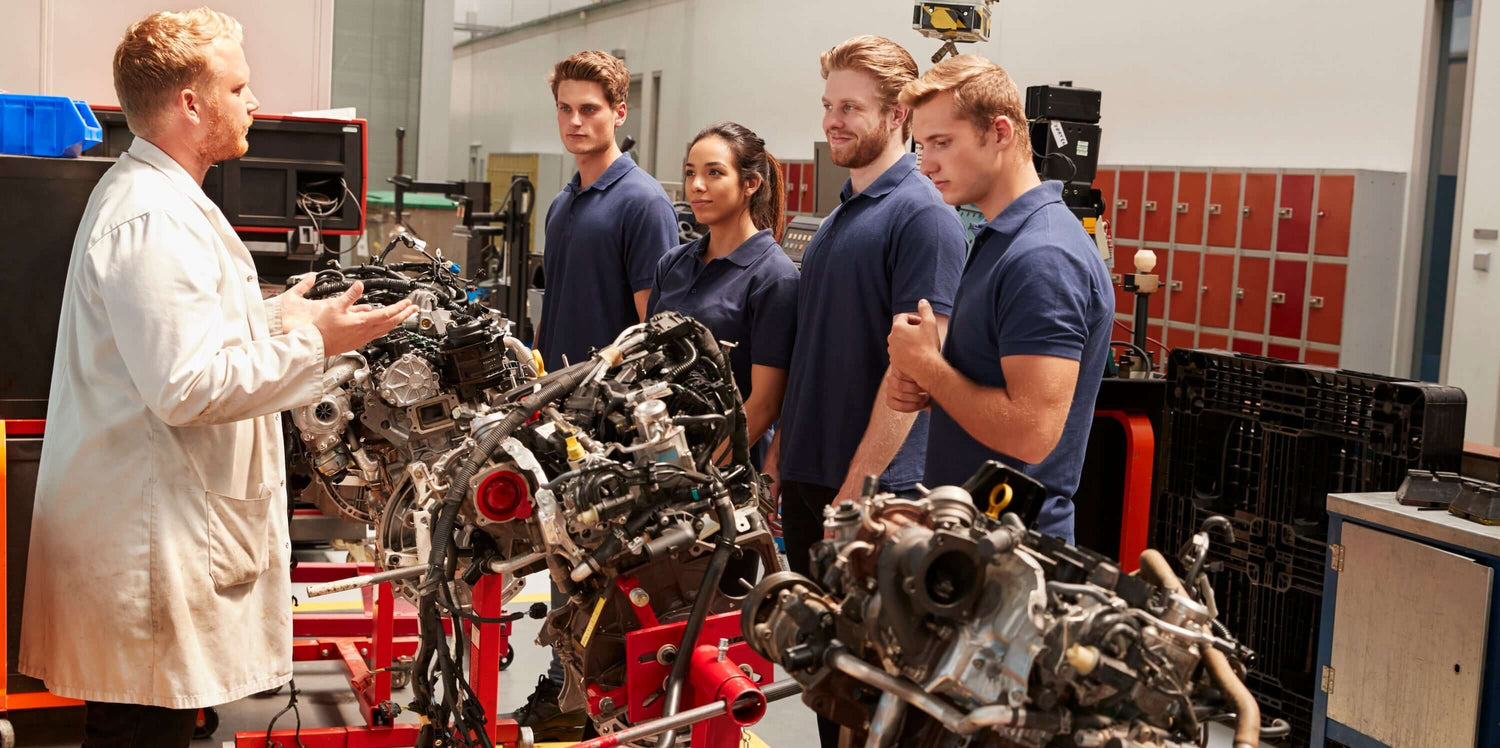
A rebuild on a Lincoln engine means pulling the existing long block, tearing it down completely, machining what needs machining (bore work, deck resurfacing, head work, valve job, crank polish or grind where applicable), replacing the wear items (rings, bearings, gaskets, oil pump, timing chain components on chain-driven engines), and reassembling. The original block stays. Everything else inside is new or restored.
A replacement means installing a different long block — a new crate engine (rare for older Lincoln platforms), a remanufactured unit from a reputable rebuilder, or a low-mileage used engine pulled from a documented donor vehicle. The original block leaves the shop and the accessories transfer over.
Same starting symptoms, very different jobs underneath. Same final outcome, very different paths to get there.
The Cost Picture for Lincoln Engines in 2026
For a 4.6L 2-valve Modular V8 in older Lincoln applications, a quality rebuild typically runs $4,500–$6,500 in total. That covers the machine shop work, a master rebuild kit, gaskets, bearings, fluids, and labor. The 2-valve is a straightforward rebuild candidate — simple OHV design, well-documented machining specs, parts widely available.
For a 5.4L Triton 3-valve, rebuild costs run higher: $6,500–$9,500. The 3-valve has documented cam phaser issues that have to be addressed during the rebuild, the chain-driven valvetrain adds labor, and the spark plug issue means more head work than the 2-valve requires.
For a 3.5L or 3.7L Cyclone V6, rebuild costs run $5,500–$8,500. The internal water pump driven by the timing chain adds substantial labor on rebuild because the entire timing system has to come apart to access it. The Cyclone's tight assembly tolerances and modern engineering make rebuild work more demanding than older Lincoln V8s.
For a 3.5L EcoBoost twin-turbo, rebuild costs run $8,000–$12,000 — the most expensive Lincoln engine to rebuild because of the turbocharger work, the direct injection components that often need attention, and the more complex induction and fueling systems.
Replacement costs for the same engines: 4.6L 2-valve reman runs $3,000–$4,800 long block plus install ($1,800–$2,500), totaling $4,800–$7,300. 5.4L Triton 3-valve reman runs $3,800–$5,800 plus install, totaling $5,600–$8,300. Cyclone V6 reman runs $3,500–$5,800 plus install, totaling $5,300–$8,300. 3.5L EcoBoost reman runs $5,500–$8,500 plus install, totaling $7,500–$11,000.
Where Rebuilds Win on Lincoln
The rebuild path makes economic sense in specific Lincoln scenarios.
For Town Cars and other 4.6L 2-valve Modular V8 platforms where the engine has a single addressable issue — an intake manifold crack, valve cover gasket leaks, or specific bearing wear without broader internal damage — a focused rebuild on the existing block delivers good value. The 2-valve is mechanically simple, parts are inexpensive, and machine shop work on these engines is routine at most experienced facilities.
For Lincoln vehicles where the owner has a sentimental or originality reason to keep the original engine, a rebuild preserves the original block and engine identity in ways that a swap doesn't. For low-mileage older Lincolns being kept for collector value, this consideration sometimes outweighs the economic argument.
For 5.4L Triton 3-valve engines specifically, the rebuild path can address the cam phaser issue and the timing chain wear simultaneously with updated components that aren't always present in catalog reman units. A rebuild done by a Triton specialist with knowledge of the platform's known weak points can deliver better long-term reliability than a generic reman.
Where Replacements Win on Lincoln
For most Lincoln engines in 2026, the replacement path wins on the criteria customers care about most: time, warranty, and predictability.
Cyclone V6 rebuilds are labor-intensive because of the internal water pump and the chain-driven valvetrain. The labor hours add up against the rebuild quote in ways that don't apply to replacement work on the same engine. For Cyclone-equipped MKZ, MKS, and MKT applications, a reman long block is often the more cost-effective answer.
EcoBoost rebuilds are extremely labor-intensive and require specialist expertise that not all shops have. The turbo components, the direct injection system, the more complex emissions equipment — all of it adds labor and adds opportunities for the rebuild to come back. A reman EcoBoost with documented turbo and injector replacement is often the more predictable answer.
For Triton 3-valve engines where multiple issues have appeared simultaneously — cam phasers worn, spark plugs damaged, timing chain stretched, oil consumption climbing — a fresh long block addresses all of them at once. Trying to address each issue individually during a rebuild can leave the customer paying rebuild rates and still ending up with an engine that has lingering issues.
The warranty math also favors replacement on most Lincoln engines. A reputable reman Lincoln long block carries 24–36 months of parts coverage and often labor coverage during the initial year. A shop rebuild typically carries 12 months at most. For customers planning to keep the vehicle for years after the work, the longer warranty translates to real value.
The Hidden Cost: Time
The least-discussed difference between the two paths is calendar time. A replacement Lincoln engine, ordered Monday, can be in the bay by Wednesday and back on the road by Friday at most experienced shops. A rebuild, by contrast, depends on machine shop turnaround and parts availability, both of which have lengthened in 2026 compared to historical norms.
A typical Lincoln engine rebuild in 2026 takes 8–16 days from teardown to back-in-vehicle. For Lincoln customers — who often have specific reasons for owning their vehicle, including some who own only that one car — the two-week downtime translates to rental car costs, missed appointments, or rearranged life that has real dollar value. Compared to the 3-day replacement turnaround, the time cost of the rebuild adds up against the rebuild quote.
What to Tell the Customer
The conversation that goes well: start with the diagnostic. Compression test, leak-down test, scan tool data, oil analysis if applicable. Establish what's actually wrong with the engine and what the realistic path to repair looks like.
If the engine has a single addressable issue and the rest of the long block is mechanically sound, the targeted repair beats both rebuild and replacement on cost. Don't quote a swap when a $2,500 repair would do the job.
If the engine has multiple issues or shows widespread wear, lay both paths out side by side. The honest rebuild estimate including likely overages once the engine is on the stand and you can see what's actually inside. The replacement estimate with the long block and supporting parts. The timeline difference. The warranty difference. Let the Lincoln customer make the call with real numbers.
Lincoln customers tend to make informed decisions when they're given real information. The shops that present the options honestly tend to win the work and keep the customer for the long term. The shops that pad the rebuild quote to push toward the swap (or push toward the rebuild for higher labor margins) tend to lose the customer the moment they get a second opinion.
The Decision Framework
Rebuild a Lincoln engine when: the engine has a single addressable issue with a known targeted fix; the platform is sentimental or has originality value; the customer has a specific non-economic reason to preserve the original block; or the rebuild can address an underlying design issue (cam phaser updates on a Triton 3-valve, for example) more completely than catalog reman.
Replace a Lincoln engine when: the platform is well-supported by quality reman supply (Modular V8, Cyclone V6, 3.5L EcoBoost all have strong reman availability); the customer wants the shortest possible downtime; the rebuild quote is approaching the replacement quote; or the engine has multiple unrelated issues suggesting broader internal wear.
The wallet math usually favors replacement on most Lincoln platforms in 2026. Sourcing from a catalog with documented warranty and casting number fitment keeps the replacement path predictable from quote through completion, which is the part Lincoln customers remember when they're recommending the shop later. Quality matters more than price on this kind of work, and the customers who can tell the difference are exactly the ones worth keeping.