
There's a temptation, when you're planning a serious Jeep build, to start with the engine you already have. Throw a cam in it, bolt on a cold air intake, tune around the rest. It works — to a point. The point you usually hit is when the supporting components in a high-mile engine start to give up under the new demands you're putting on them.
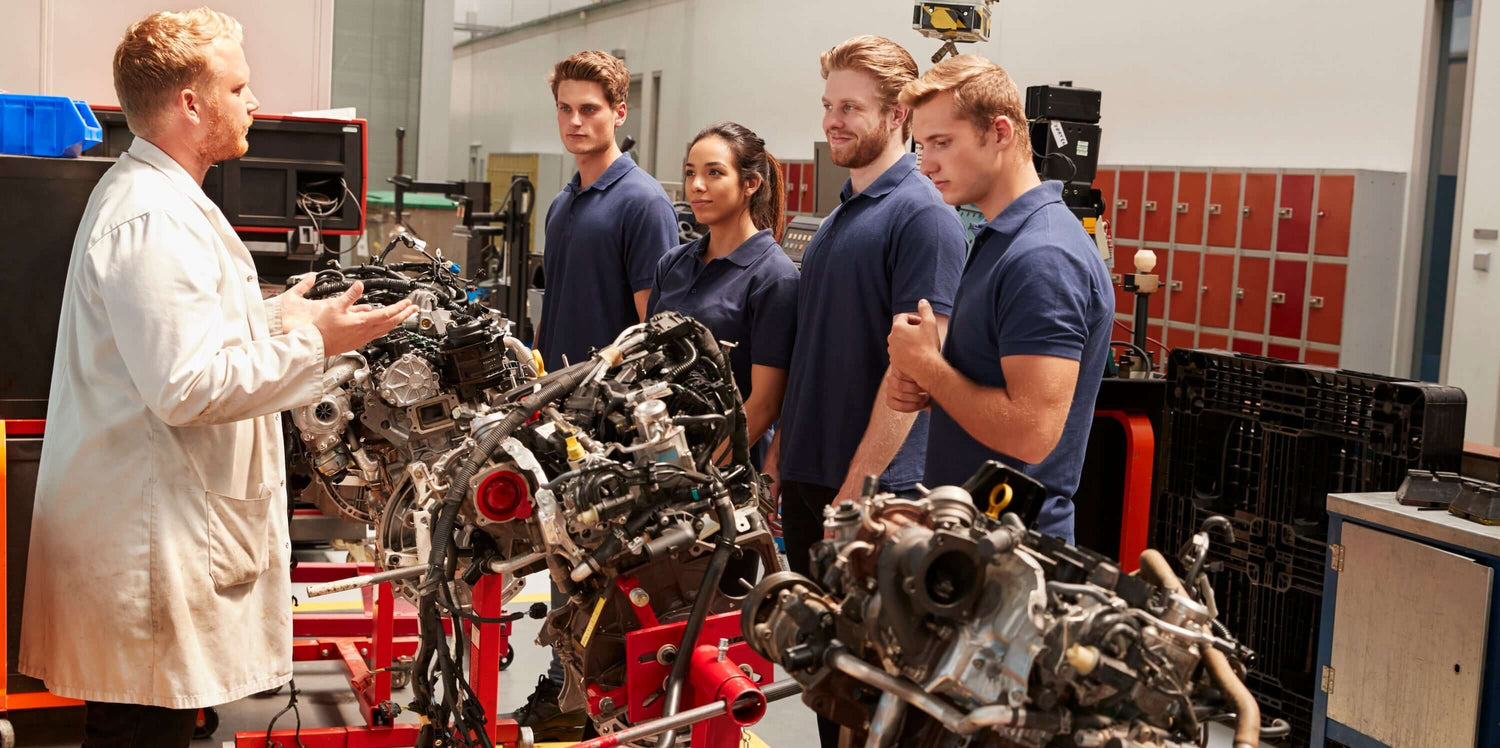
The cleaner path, especially on builds aiming for real horsepower gains, is to start with a fresh crate engine and build from a known-good baseline. The cost difference looks bigger on paper than it actually is once you account for the diagnostic time, the warranty exposure, and the comebacks you avoid. Here's how shops approach Jeep performance builds in 2026 when the budget can support a proper foundation.
Why a Fresh Block Matters for Performance
Every used Jeep engine carries some amount of internal wear and some amount of unknown history. Cylinder walls have measurable taper. Bearings have settled into specific clearance ranges. The piston rings have seated in a particular wear pattern. None of that matters when you're driving the engine at stock loads. It starts to matter a lot when you're adding 30 to 80 percent more cylinder pressure.
A fresh crate engine eliminates those variables. Tolerances are at factory spec. The bore is round. The rings haven't seated to anything yet. Whatever performance work you build on top of that has predictable behavior because the starting point is known.
The second reason is warranty. Most performance modifications void factory warranty automatically. But a fresh crate engine usually carries its own warranty from the supplier or rebuilder, and that warranty often survives bolt-on modifications as long as you don't open the long block. Building on a high-mile engine with no warranty leaves you holding the bill for any failure, regardless of whether the modification caused it.
Platform Choices for Performance Builds
Not every Jeep engine responds to performance work the same way. Some of them are naturally good performance starting points. Others are not.
The 4.0L straight-six rewards moderate performance work but has a ceiling. A stroker conversion (4.6L or 4.7L) using readily-available aftermarket cranks and rods is the proven path — reliable, well-documented, and good for 230–270 horsepower in street-friendly forms. Pushing further requires forced induction and substantial supporting work. For most builders, the stroker conversion on a fresh 4.0L block is the sweet spot.
The 5.7L HEMI in Grand Cherokee applications is a much more flexible performance starting point. Naturally-aspirated bolt-on builds can reach 400–450 horsepower with cam, intake, exhaust, and tune. Supercharged builds on the OEM 5.7L block reach 600–700 horsepower reliably with appropriate fueling and cooling support. Forced induction on a 6.4L block extends the range further.
The 3.6L Pentastar is the least friendly performance platform of the three. The internals weren't designed for sustained high-cylinder-pressure operation, and bolt-on gains are modest. The platform isn't impossible to build on — the Wrangler 392's 6.4L HEMI swap path is well-trodden — but most Pentastar performance projects end up as swap projects rather than worked-engine projects.
What "Performance" Actually Means in a Jeep
Horsepower targets matter less in a Jeep than they would in a sports car. Most Jeep performance builds are about torque, drivability, and durability at low to mid RPM — not about top-end peak numbers.
For a Wrangler running 35-inch or larger tires, the question is whether the engine has enough torque to drive those tires at highway speed without constant downshifting and whether the engine can sustain that effort for thousands of miles. Adding 30 horsepower to peak output that the engine never sees in daily use isn't a useful upgrade. Adding 20 lb-ft of torque at 2,000 RPM, where the engine actually lives, transforms the vehicle.
Tuning the build for the use case is more important than chasing peak numbers. A trail-focused Wrangler wants low-end torque and predictable throttle response. An overland-focused build wants thermal margin and durability at sustained highway load. A dragstrip-focused build is rare in the Jeep world and is a different conversation entirely.
The Build Stack on a Fresh Crate Engine
Once you've got a fresh long block on the stand, the sequence of performance work that adds up to meaningful gains is fairly consistent across platforms.
Step one is the cam, if you're going there. Cam selection drives every other decision — valve springs, pushrods, retainers, and the rocker geometry that has to clear it. Buy the cam from a reputable Jeep-specific supplier and follow the manufacturer's specs for supporting hardware. Mixing parts across cam profiles is where home builds go sideways.
Step two is the intake and exhaust. A free-flowing intake manifold on platforms where one exists, a high-flow throttle body where applicable, and an exhaust system with appropriate primary tubing length matched to the cam profile. Headers on the 4.0L. A cat-back system at minimum on the V8 platforms.
Step three is fueling. Performance gains demand more fuel. On older Jeeps, this means upgraded injectors and a higher-flow fuel pump. On newer Jeeps, fuel rail upgrades and ECU calibration to match. Underfueling a performance engine is how you turn an expensive build into an expensive paperweight.
Step four is the tune. A custom tune by a shop that knows the platform is non-negotiable on anything but the most modest builds. Generic flash tunes work for stock-or-near-stock applications. The moment you've changed cam, intake, exhaust, and injectors, the engine is asking for calibration that matches what you actually built.
Supporting Components That Don't Get Enough Attention
Performance builds fail more often from the supporting systems than from the engine itself.
Cooling: more horsepower equals more heat. A larger radiator, an upgraded fan setup, and on serious builds an external oil cooler. Running stock cooling on a built engine is the single most common reason performance Jeeps end up back on the lift.
Transmission: more torque equals more transmission stress. The factory 42RLE and 545RFE transmissions behind older Jeeps were not designed for sustained operation at 30 percent over stock torque. Plan for a transmission build, an upgraded valve body and shift kit, and a transmission cooler appropriate to the power level.
Driveline: more torque also means more axle stress. Stock D30 front axles on Wranglers are already marginal under stock power with larger tires. Performance work shifts the question from "if" to "when." Plan the axle upgrade as part of the build budget, not as a discovery later.
The Total Cost Reality
A serious Jeep performance build on a fresh crate engine typically lands somewhere between $12,000 and $25,000 all-in, depending on the platform and the power target. The fresh long block is $4,000–$8,000 of that. Cam, valvetrain, intake, exhaust, fueling, and tune add another $4,000–$8,000. Supporting cooling, transmission, and driveline work brings the rest.
That's a lot of money. It's also less money than the alternative path of building on a tired engine, dealing with the comeback when the bottom end gives up, paying for the diagnostic time to figure out what failed, and then doing the swap anyway. Doing it once on a known-good foundation is the cheaper long-term move.
Sourcing the Foundation
The crate engine you start with sets the ceiling for what the rest of the build can become. Performance builds need engines with documented internal specs, known-good blocks without prior overheat history, and warranty terms that don't fall apart the moment you bolt on a cam.
For most Jeep platforms, a remanufactured long block from a reputable rebuilder is the sweet spot — fresh internals, predictable cost, and warranty coverage that survives reasonable modifications. New crate engines, where available, are the premium option. The Jeep engines on our catalog publish their warranty terms in detail, which is the thing that matters when you're about to put $20,000 into a build on top of the foundation.
Pick the foundation carefully. The rest of the build is forgiving. The engine block is not.