
Every shop has had this conversation. A Jeep rolls in with a tired 4.0L or a Pentastar that's burning oil faster than it's making power, and the owner asks the question every customer eventually asks: should we rebuild what's in it, or drop in a replacement? The answer sounds like it should be straightforward. It almost never is.
The right call depends on the engine in question, the labor market in your zip code, the customer's expectations, and where parts pricing has landed for that specific platform in 2026. Get the math wrong and you either lose money on the job or saddle a customer with an engine that comes back at 30,000 miles. Get it right and you win a long-term customer who tells their friends. Here's the framework we walk through every time the Jeep engine replacement vs rebuild question lands on the desk.
What Each Option Actually Means
Half the time the customer doesn't quite know what they're asking for, so it's worth defining terms before you quote anything.
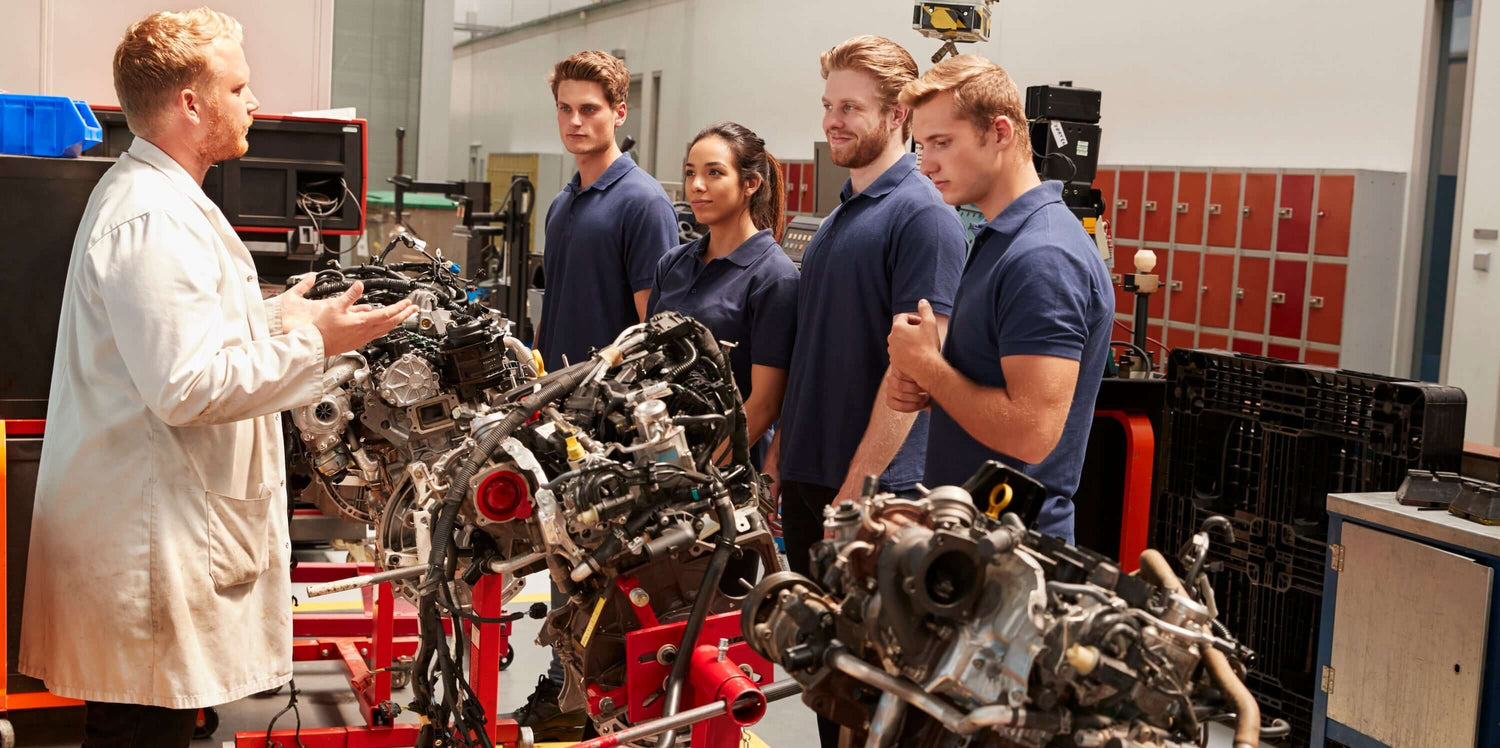
A rebuild means pulling the existing engine, tearing it down to its constituent parts, machining what needs machining (cylinders bored or honed, crank polished or turned, heads resurfaced, valves redone), replacing the wear items (bearings, rings, gaskets, timing components, oil pump), and reassembling the whole thing. The block and major castings stay. Everything else, in theory, comes back to factory or near-factory spec.
A replacement means installing a different long block. That can mean a new crate engine direct from the manufacturer, a remanufactured unit from a reputable rebuilder, or a low-mileage used engine pulled from a donor vehicle. In all three cases, the original block leaves the shop. The accessories — alternator, A/C compressor, power steering pump, intake, exhaust manifolds in most cases — typically transfer over from the old engine.
These are not interchangeable jobs. The labor profile, parts cost, timeline, and warranty exposure are all different, and so is the answer to which one makes more sense.
The Cost Picture in 2026
Numbers shift by region and by Jeep platform, but the broad ranges have settled into a recognizable pattern this year.
Rebuild costs
For a 4.0L straight-six, a quality rebuild in 2026 generally lands somewhere between $4,000 and $6,500 in total. That covers the machine shop work, a master rebuild kit, gaskets, bearings, timing components, fluids, and the labor to tear down and reassemble. For a Pentastar 3.6L, the range is wider — typically $5,500 to $8,500 — because the engine is more complex, the head work is more involved, and you often end up replacing more components than you originally quoted once you see what's inside.
The trap with rebuilds is that the quote is a moving target. You don't know for sure what the crank looks like until you've measured it. You don't know whether a cylinder is cracked until you've pressure-tested it. Customers don't always understand that "we won't know for sure until we get inside" is an honest answer, not a sales tactic.
Replacement costs
A remanufactured 4.0L drops in around $3,500–$5,500 long block, with installation labor on top — typically $1,500–$2,500 depending on the platform and your shop rate. New crate engines for older Jeeps are harder to find every year as factory inventory dries up, but where available they sit higher than reman.
A reman Pentastar runs $4,500–$7,000 long block plus install. Low-mileage used engines from documented donor vehicles run lower — sometimes substantially — but the warranty picture changes dramatically when you go used, and that risk has to live somewhere on the quote.
Total replacement cost, all in, generally lands in the $5,000–$10,000 range depending on the Jeep platform, sourcing path, and how much accessory work the job actually requires.
Where Rebuilds Win
The rebuild path makes sense more often than people think, but only in specific situations.
If the engine is mechanically simple and well-documented — the 4.0L is the textbook example — a competent machine shop can return a rebuilt unit to better-than-stock condition for predictable money. Owners of pre-2006 XJs, TJs, and ZJs who care about keeping their truck original (or who want to upgrade internals while they're in there) get real value from a rebuild that a drop-in replacement can't match.
Rebuilds also win when supply of a specific replacement engine has thinned out. Some early-2010s 3.6L variants have gotten harder to source as reman feedstock has aged out of the donor pool. When you can't get a quality replacement quickly, a rebuild keeps the customer's vehicle theirs instead of putting them on a four-month waitlist.
And rebuilds sometimes win on emissions paperwork in states that look closely at engine-stamped numbers. Keeping the original block can simplify state inspection in a way that a swap doesn't.
Where Replacements Win
The replacement path tends to win on the criteria that matter most to customers in 2026: time, warranty, and predictability.
A reman drop-in is a known cost on day one. The customer signs off on a fixed number, the shop knows exactly what it's getting, and the engine arrives with a documented warranty — typically 12 to 36 months for reman, longer for new. Compare that to a rebuild where the line items can grow once the block is on the stand and the customer is sitting in your waiting room every other day waiting on machine shop turnaround.
Replacements also win on labor hours in most shops. Pulling the engine, swapping accessories, and installing a fresh long block is a relatively predictable two- to three-day job for an experienced tech. A full rebuild keeps that bay tied up for a week or more, including machine shop time, and the labor uncertainty cuts into shop profitability even when the customer-facing price looks good.
And then there's the comeback risk. A rebuild is only as good as the weakest part of the original block and the slowest item on the machine shop's bench. A reputable replacement Jeep engine from a single supplier with consistent QC standardizes that variability. For shops doing two or three Jeep engine jobs a month, that consistency is worth real money even when the rebuild quote pencils out lower on paper.
The Hidden Cost Most Quotes Miss
The number on the invoice isn't the whole cost picture. The piece that gets left out most often is downtime risk.
If a rebuild fails in the first 12 months — a bearing spun, a head crack that didn't show up on the original inspection, a leak that turns out to be a porous block — the shop is on the hook for the warranty work. That comeback eats two to three days of bay time plus parts, and there's no good way to bill the customer for it. The same failure on a reman replacement gets handed back to the supplier, who covers parts under their warranty. The labor hit on a covered claim is still real, but the parts exposure is gone.
Over a year of Jeep engine work, that warranty exposure adds up. Shops that have done the math tend to drift toward replacement-first quoting on anything but the simplest classic platforms.
How to Walk a Customer Through the Decision
The conversation goes better when you give the customer real numbers and real trade-offs, not just a recommendation.
Start with the diagnostic. What's actually wrong with the engine, and how much of the block is still serviceable? A compression test, a leak-down test, a borescope check, and a quick look at the oil and coolant tell you whether a rebuild is even a reasonable option. If three of six cylinders are low and the coolant is in the oil, the engine has already made the decision — a rebuild on that block is throwing good money after bad.
If the engine is a candidate for either path, lay out the two quotes side by side. Show the rebuild range honestly, including the typical 15–20% overage that creeps in once the engine is apart. Show the replacement quote as a fixed number with a documented warranty. Walk the customer through the timeline difference — a week or more for a rebuild, two to three days for a replacement — and let them weigh that against their actual life.
Most customers, when you put the numbers in front of them clearly, pick the replacement. The ones who pick the rebuild usually have a specific reason — a vehicle they've owned for twenty years, a build they're proud of, or a 4.0L purist's attachment to the original block — and those customers are usually good ones to have.
The Quick Decision Framework
If you want a one-paragraph version to keep on the service writer's desk: rebuild if the engine is a simple, well-documented platform with a healthy block and a customer who cares about keeping it original. Replace if the engine is complex, the block has been overheated, supply is good for the platform, and the customer cares more about getting the Jeep back on the road quickly with a warranty than about keeping the original numbers stamped on the deck.
The wallet question almost always favors replacement on Pentastars and other modern platforms. On older 4.0L straight-sixes, the rebuild case is real and shouldn't be dismissed. Either way, the answer comes from the diagnostic and the customer conversation — not from a default policy.