
The rebuild-versus-replace decision on a Honda lands differently than the same decision on most other platforms. Honda's reputation for reliability sets up specific expectations: the customer often arrives believing the engine can be saved if only the right repair is done. Sometimes that's true. Often it isn't. The economics of Honda engine work in 2026 push more decisions toward replacement than toward rebuild for reasons specific to the platform, the aftermarket, and the typical Honda customer.
Here's the framework experienced shops use when a Honda customer asks whether to rebuild what's in the bay or drop in a fresh long block.
Define the Two Paths
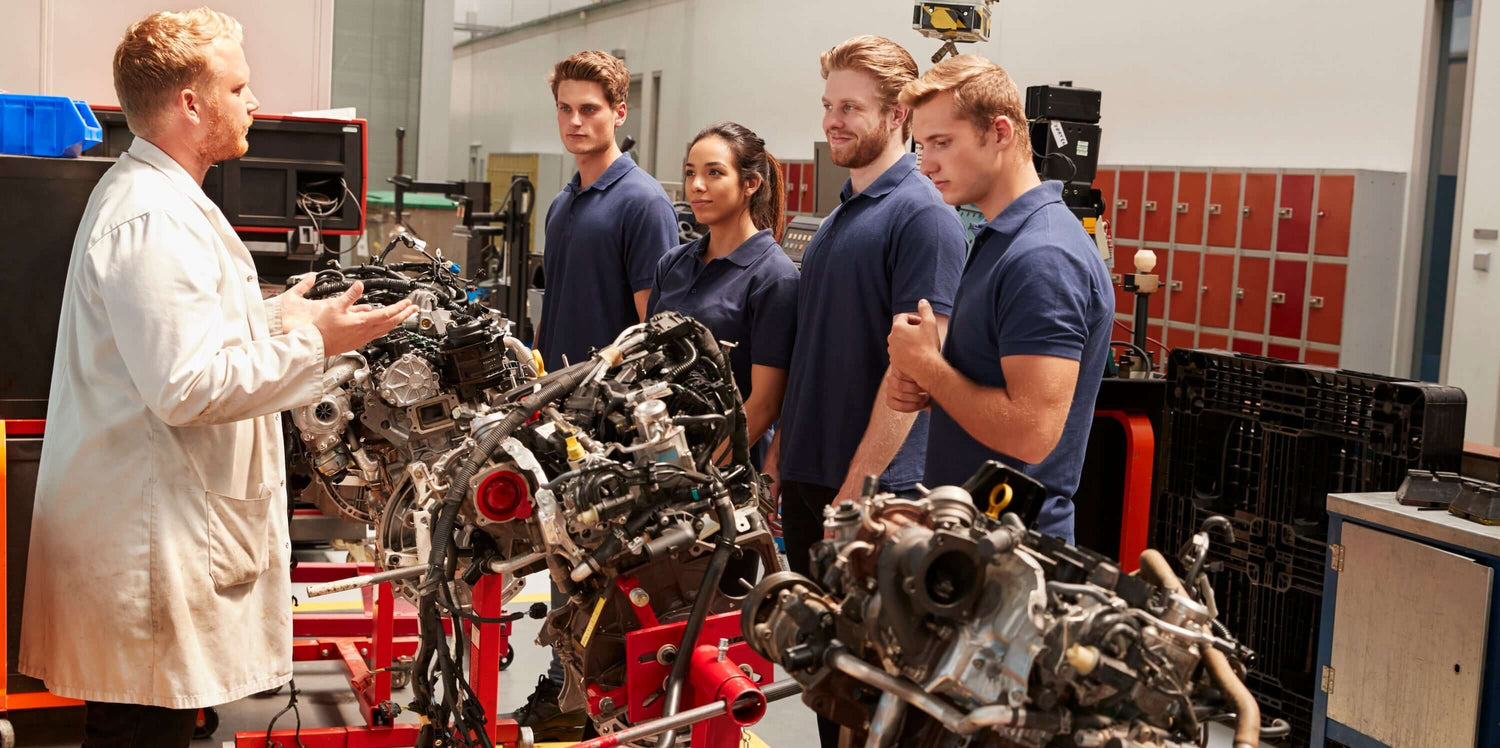
A rebuild on a Honda engine means pulling the existing long block, tearing it down to components, machining what needs machining (bore work, deck resurfacing, head work, valve job, crank polish or grind), replacing the wear items (rings, bearings, gaskets, oil pump, timing components on chain-driven engines), and reassembling. The original block stays. Everything else inside is new or restored.
A replacement means installing a different long block: a new crate engine (limited availability for older Honda platforms in 2026), a remanufactured unit from a reputable rebuilder, a low-mileage used engine from a documented donor vehicle, or for some applications a JDM-imported engine.
Same starting symptoms, very different jobs underneath.
The Cost Picture for Honda Engines in 2026
For a K-series 2.0L or 2.4L engine, a quality rebuild typically runs $3,500–$5,500 in total. The K-series is a well-supported rebuild candidate: simple DOHC architecture, abundant aftermarket parts, machine shop work that's routine at most experienced facilities. The variable valve timing components and the VTEC system add some complexity to the rebuild scope but the work is well-documented.
For a J-series V6, rebuild costs run higher: $5,500–$8,500. The J35 with VCM adds substantial complexity because the VCM hardware itself often needs replacement (or removal) as part of the rebuild, and the timing chain assembly is involved. Non-VCM J-series rebuilds are less expensive but still labor-intensive due to the V6 architecture.
For a 1.5L L15B7 turbo, rebuild costs run $4,500–$7,000. The direct injection, turbocharger, and emissions equipment all add labor scope. Rebuilds on this engine also need to address the fuel dilution issue with updated components, which not every machine shop is equipped to do correctly.
For an R-series or D-series four-cylinder in older Civic applications, rebuild costs are typically the lowest in the Honda lineup: $2,800–$4,500. These engines are mechanically simple and the parts are inexpensive.
Replacement costs for the same engines: K-series reman long block runs $2,200–$3,800 plus install ($1,400–$2,000), totaling $3,600–$5,800. J-series V6 reman runs $3,500–$5,500 plus install ($1,800–$2,500), totaling $5,300–$8,000. L15B7 reman runs $3,500–$5,500 plus install, totaling $5,000–$7,500. R-series/D-series reman runs $1,800–$3,200 plus install, totaling $3,200–$5,200.
Where Rebuilds Win on Honda
The rebuild path makes economic sense in specific Honda scenarios.
For high-value performance applications (Civic Type R, Acura RSX, Integra Type R, Accord Sport, the various K20A variants that have become collector engines), a rebuild allows performance internals to be added during the work. Forged pistons, stronger rods, performance camshafts, larger valves. A built K20 or K24 with documented internals is worth substantially more in the Honda performance community than an off-the-shelf reman.
For vintage and collectible Honda applications, such as first-generation Integras, older Preludes with H22 power, NSX (rare in this conversation but the same logic applies), specific Civic Si variants, the rebuild path preserves the original engine identity in ways that matter for collector value.
For 1.5T applications where a careful machine shop can address the fuel dilution issue with updated ring packages, revised oil control components, and updated calibration, a rebuild can deliver better long-term reliability than catalog reman that may not have addressed the underlying design issue.
Where Replacements Win on Honda
For most Honda engines in 2026, the replacement path wins on time, warranty, and predictability.
J-series V6 rebuilds are labor-intensive. The V6 architecture, the VCM hardware on equipped variants, and the timing chain assembly all add bench hours. A reman J-series long block from a reputable rebuilder, with VCM addressed in the rebuild scope, typically delivers better economics than a shop rebuild that has to address the same components from scratch.
Quality reman supply for the most common Honda engines is strong in 2026. K-series, J35, R18, L15B7, D-series, and B-series engines all have well-developed reman markets with documented warranty terms. The catalog quality has improved meaningfully over the last few years.
The warranty math favors replacement. A reputable reman Honda long block carries 24–36 months of parts coverage and often labor coverage during the first year. A shop rebuild typically carries 12 months at most. For customers planning to keep the vehicle for years after the work, the longer warranty translates to real value.
For Honda owners who chose the brand specifically for reliability and want minimal future engine concerns, the reman replacement path delivers a clear value proposition: known internals, documented warranty, predictable service life.
The Hidden Cost: Time
A replacement Honda engine, ordered Monday, can be in the bay by Wednesday and back on the road by Friday at most shops. A rebuild, by contrast, depends on machine shop turnaround and parts availability, both of which have lengthened in 2026 compared to historical norms.
A typical Honda engine rebuild in 2026 takes 7–14 days from teardown to back-in-vehicle. For Honda customers, many of whom drive the vehicle daily for commuting or family transportation, the two-week downtime translates to rental cars, missed appointments, or rearranged life that has real dollar value. Compared to the 3-day replacement turnaround, the time cost of the rebuild adds up against the rebuild quote.
The JDM Question
For some Honda applications, Japanese-domestic-market imported engines offer a sourcing path that's worth considering. The JDM imports typically have much lower mileage than US-market used engines because of Japanese vehicle replacement patterns. For Civic, Integra, and certain Accord applications, JDM imports have been a popular replacement path for enthusiasts for years.
The complication: JDM engines may differ from US-market equivalents in emissions equipment, calibration, and accessories. Some are plug-and-play. Some require modifications to be street-legal. Some have ECU differences that affect compatibility. For US-market street use in 2026, verify the specific JDM variant is compatible with your platform and emissions requirements before purchase. The compliance picture in CARB states is particularly important to confirm in advance.
What to Tell the Customer
The conversation that goes well: start with the diagnostic. Compression test, leak-down test, oil analysis, scan tool data. Establish what's actually wrong with the engine.
If the engine has a single addressable issue and the rest of the long block is mechanically sound, the targeted repair beats both rebuild and replacement on cost. A K-series with a single misfire that traces back to a coil or injector doesn't need an engine; it needs the coil or injector.
If the engine has multiple issues or shows widespread wear, lay both paths out side by side. The honest rebuild estimate including likely overages once the engine is on the stand. The replacement estimate with the long block and supporting parts. The timeline difference. The warranty difference. Let the customer make the call with real numbers.
For the average Honda customer in the average situation, the replacement path makes more sense. For the performance enthusiast, the collector, or the customer with a specific non-economic reason to preserve the original engine, the rebuild path is right. Those customers are usually good ones to have.
The Decision Framework
Rebuild a Honda engine when: the engine is a high-value performance application; the platform is vintage or collectible; the rebuild can address an underlying design issue (1.5T fuel dilution rings, J35 VCM hardware) more completely than catalog reman; or the customer has a specific non-economic reason to preserve the original block.
Replace a Honda engine when: the platform has strong reman supply (which covers most modern Honda engines); the customer wants the shortest possible downtime; the rebuild quote is approaching the replacement quote; or the engine has multiple unrelated issues suggesting broader internal wear.
The wallet math usually favors replacement on Honda platforms. Sourcing from a catalog with documented warranty and fitment keeps the replacement path predictable from quote through completion, which is the part Honda customers remember when they're recommending the shop later.
Remanufactured Honda engines in stock now
If the math comes out in favor of replacement, Power Engines holds remanufactured Honda long blocks in stock: the 2.4L K24A1 for the 2002-2006 CR-V at $1,499, the K24Z1 for the 2007-2009 CR-V at $1,599, the Earth Dreams K24W1 / K24W9 for the 2013-2019 Accord and CR-V at $1,999, and the 3.5L J35Z2 V6 for the 2008-2015 Accord, Crosstour and Acura RDX at $2,599. All carry a 6-month warranty with a 30-day installation window and there is no core charge. Browse remanufactured engines.