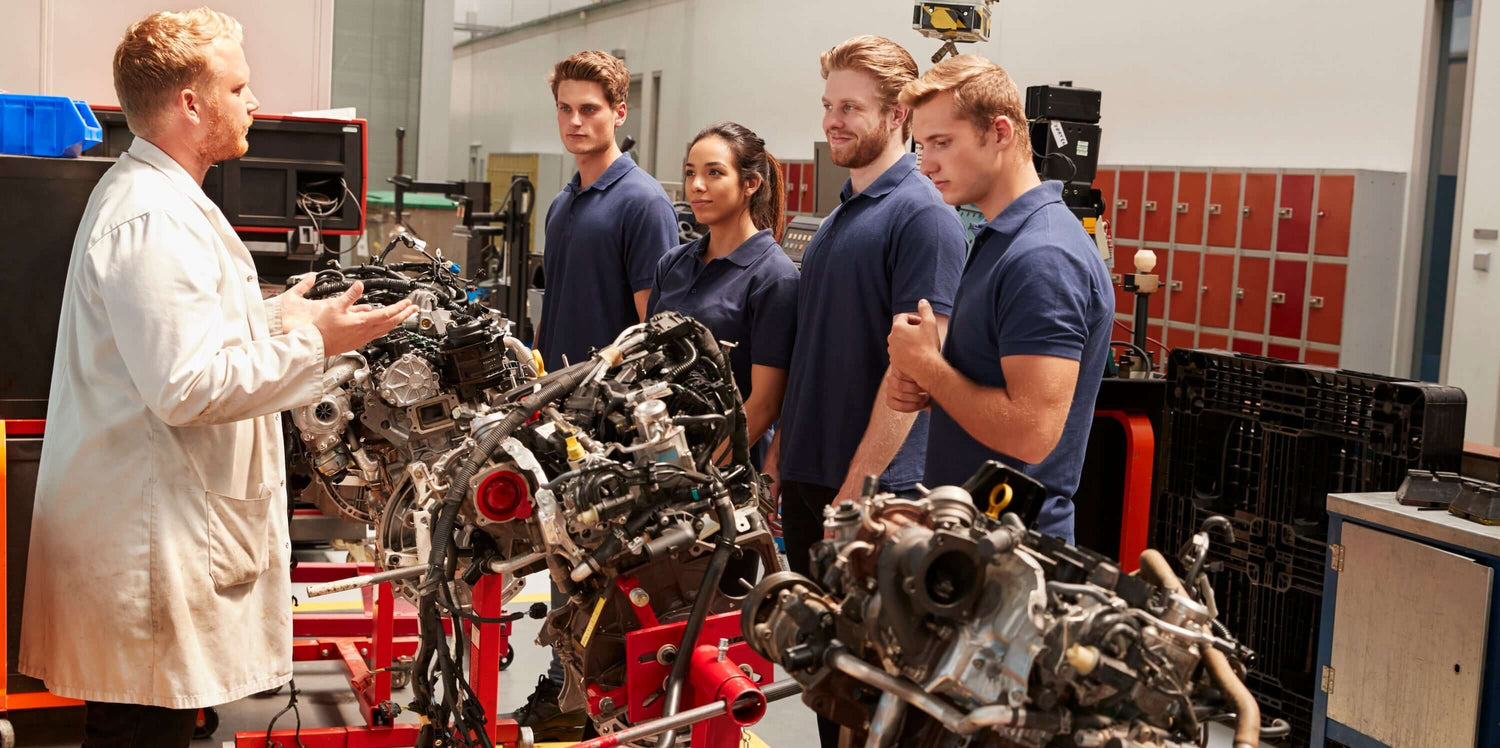
BMW engines are precision-built even at factory specification, and the break-in period on a fresh BMW engine matters more for long-term reliability than it does on most other manufacturers. The tight tolerances that make BMW engines excellent street and track performers also make them less forgiving of improper break-in patterns. A BMW that gets the first 500 miles right runs decades. A BMW that gets the first 500 miles wrong burns oil for its entire service life.
Here's the playbook BMW specialists hand customers when a fresh engine goes home from the shop.
What Break-In Is Actually Doing
A fresh BMW engine has manufacturing tolerances at factory or rebuild specifications. The cylinder walls have a specific honing pattern. The piston rings haven't seated. The bearings haven't found their long-term clearance. The valves haven't wear-mated to their seats. On Valvetronic-equipped engines, the eccentric shaft mechanism hasn't found its long-term operating balance. On VANOS-equipped engines, the cam phaser components haven't fully established their oil flow patterns. On turbocharged engines, the turbo bearings haven't completed their initial wear-in.
Break-in is the process of those components finding their long-term relationships through controlled wear. The goal of the first 500 miles is varied load on every internal surface — enough for each to find its place, without overstressing any of them.
The First 30 Minutes
The most important window of the entire break-in period. After the first start, idle for two to three minutes to confirm oil pressure and watch for leaks, then drive the vehicle.
Sustained idling for extended periods during break-in is one of the worst things you can do to a fresh BMW. Get the BMW on the road within five minutes. Drive through varied speeds in the 25–55 mph range. Vary the load.
For BMW turbocharged applications, the first 30 minutes principle applies specifically to boost operation — avoid full boost during the first cycle. Let the turbocharger come up to operating temperature with light boost demand only.
The First 50 Miles
Through the first 50 miles, keep the engine working but stay out of the upper third of the RPM range.
For an M54 or N52 naturally-aspirated straight-six, below about 4,500 RPM. For an N54 or N55 turbocharged straight-six, below about 4,500 RPM and avoid sustained boost above 6 psi. For an N20 four-cylinder turbo, below about 4,500 RPM and similar boost limitation. For an N63 V8, below about 4,500 RPM and avoid full-throttle operation. For S65 and S55 M-engines, below about 5,000 RPM. For S85 V10, below about 5,500 RPM (the V10 redlines substantially higher than other BMW engines but the same percentage principle applies).
Avoid sustained highway cruise at single speed. Avoid towing. Avoid stop-and-go traffic when possible. The ideal first 50 miles is back-road driving with mixed speeds.
The First 500 Miles
The full break-in window extends to 500 miles. Over that distance, gradually expand the RPM range. By 200 miles, brief excursions to higher RPM are fine. By 400 miles, moderately spirited driving is appropriate. By 500 miles, normal operation is acceptable.
For BMW turbocharged applications specifically, avoid sustained full boost operation through the entire 500 miles. The turbocharger and the engine's combustion chamber both benefit from a measured introduction to high-boost operation.
For BMW M-engines, the break-in is particularly important. M-engines are precision-built and the rings, bearings, and valvetrain all benefit from the full window before being asked to deliver M-level performance.
Check oil weekly during the break-in period. A fresh BMW engine can show oil consumption higher than its long-term rate during the first 500 miles.
The Critical First Oil Change
The most important maintenance event in the engine's life. The oil change at 500–1,000 miles pulls out break-in debris. Even on a properly rebuilt engine, that debris exists.
Use BMW Long Life synthetic oil. Don't substitute non-BMW oils during break-in. BMW specifies oil viscosity and oil specification for each engine — follow the specification exactly.
Cut the old oil filter open and inspect the filter media. Small amounts of fine residue are expected. Larger metal chips warrant immediate investigation.
Cooling System Care
A fresh BMW engine generates more internal friction than a broken-in engine. BMW cooling systems benefit from careful air-purging procedures after a swap.
Confirm coolant level after the first 30 minutes of run time, after the first day of driving, and at the first oil change. Use BMW-specified G48 or equivalent coolant. Don't substitute generic coolants.
Listening During Break-In
The first 500 miles are an audit window. Healthy BMW engines have consistent, predictable sound profiles.
For Valvetronic-equipped engines, listen for any unusual Valvetronic-related sounds. Light operating noise is normal; ticking or rattling is not.
For VANOS-equipped engines, listen for any unusual VANOS operation. Normal VANOS transitions are subtle.
For turbocharged BMW engines, listen for any unusual turbo-related sounds. Wastegate flutter, surge, or unusual turbo whine are not normal during break-in.
For BMW M-engines with individual throttle bodies, the engine's idle quality should be consistent. Uneven idle on individual cylinders indicates throttle body adjustment needs.
Documentation
Most BMW engine warranties in 2026 require documentation of break-in compliance. Keep a simple log: date, mileage, observations, fluid checks, the date and mileage of the first oil change. Photograph the cut-open filter.
The 500-Mile Checkup
Schedule a return visit to the shop around 500 miles after installation. The checkup includes the first oil change, torque verification on accessible fasteners, a scan for stored codes with a BMW-capable scan tool, and a fluid check across cooling and oil systems.
For BMW turbocharged applications, verify boost solenoid operation, wastegate operation, and turbo health on the scan tool.
For Valvetronic-equipped engines, verify Valvetronic adaptation has occurred. The scan tool data shows whether the Valvetronic system has completed its initial adaptation.
For M-platform applications, the M-specific calibrations and adaptations need to complete. The scan tool confirms readiness.
A fresh BMW engine from a documented BMW specialist with proper break-in, the right first oil change, and BMW-specific maintenance going forward should give years of reliable service. The break-in window is short. The reward for getting it right lasts as long as you own the BMW.